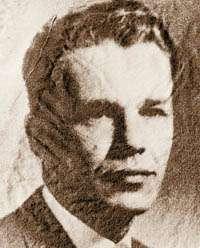
Josiah “Joe” Hazen, a 45-year-old White male from Douglas, Wyoming, was remembered as the sheriff who rode out after danger when much of the country still lived by the speed of a horse and the crack of a rifle. In the first days of June 1899, after the sensational Wilcox train robbery on the Union Pacific line, Hazen joined the furious chase that followed the Wild Bunch and its allies into rough country.
The trail led toward Castle Creek and the badlands that fed into the Hole-in-the-Wall country, where the fugitives knew the terrain far better than the men hunting them. There, during the pursuit, Hazen and his posse closed in too tightly, and the chase turned into an ambush and gunfight. Hazen was shot in the abdomen and went down in the dust while the outlaws broke away and escaped.
The killing quickly became one of the most talked-about crimes in Wyoming's outlaw era because Hazen was not a nameless traveler or a bystander caught in someone else's war. He was the law in Converse County, a familiar figure in Douglas, and his death struck the town as both a public tragedy and a personal wound. Accounts written afterward describe him as brave, steady, and deeply respected, which only sharpened the bitterness that followed. His funeral in Douglas was remembered as a major event, the kind of mourning that turns a violent death into local legend. In the years that followed, his grave and memorial references kept the story alive as part of the larger saga of the Wild Bunch, Butch Cassidy, and the Hole-in-the-Wall gang.
As for who actually fired the fatal shot, the story grows murkier the closer one looks. Harvey “Kid Curry” Logan is the name most often attached to Hazen's death, and many later historical accounts identify him as the gunman or at least as one of the principal killers in the posse fight. Other accounts spread the blame more widely, naming George Curry as part of the shooting and, in some retellings, even suggesting Tom Roberts may have been the man who fired the fatal round. What remains consistent is that Hazen was killed while pursuing members of the outlaw band tied to the Wilcox robbery, and that the men being hunted slipped away before the posse could bring them in. The uncertainty over the exact shooter became part of the case itself, leaving behind a murder famous enough to be remembered, but muddy enough that it was never resolved with the clean finality people wanted.
There were arrests tied to the robbery that set the chase in motion, but not a definitive courtroom reckoning for Hazen's killing itself. Bob Lee, also known as Bob Curry in some accounts, was later captured and convicted for his role in the train robbery, receiving a prison sentence, yet he was not convicted of murdering Hazen. Kid Curry's name continued to shadow the case, and he was later arrested in an entirely different matter after violence involving Tennessee officers. He was convicted there on robbery-related charges rather than for Hazen's death, and then escaped custody before any final punishment could settle the larger legend around him. That is one reason Hazen's killing has lingered in the historical record with such a haunted quality: the sheriff fell in the line of duty, the suspects became even more notorious, but no single trial ever neatly closed the book on who answered for the shot that killed him.
So the death of Josiah Hazen survives not only as a homicide in Douglas's history, but as a frontier story suspended between fact, pursuit, and myth. A sheriff rode out to stop train robbers who had exploded into national attention, tracked them into hostile country, and never made it home alive. The men believed responsible became outlaws of enduring fame, yet the case itself never reached a satisfying legal end. What remains is the image of Hazen at the center of that violent Wyoming summer: a lawman in pursuit, a gunfight in the brush and creek country, and a community left to bury one of its own while the riders who killed him vanished back into the broken land.