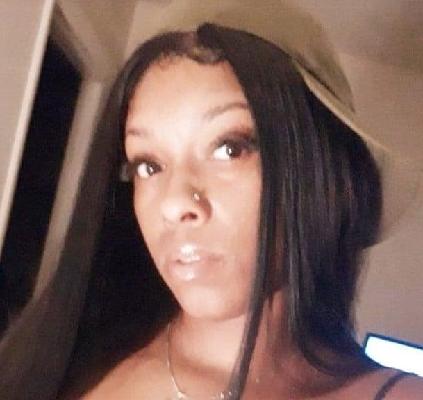
Nineteen-year-old Vickie Webb, a young woman from Nashville, Tennessee, was living in an apartment along Murfreesboro Pike when her life was abruptly and violently cut short in December 2010. In the weeks leading up to her death, contact between Vickie and her family had quietly faded. Relatives later told authorities they had not heard from her in some time, and the silence grew more troubling as rent notices piled up and went unanswered. Inside the apartment, the power was eventually shut off after nonpayment, leaving the unit dark and abandoned-looking from the outside, even as the reality inside was far worse than anyone imagined.
The truth emerged on December 19, 2010, when maintenance staff used a passkey to enter the unit after the landlord flagged the overdue rent and lack of response. Once inside, they discovered Vickie’s decomposing body, a scene that made clear she had been dead for some time before being found. An autopsy later revealed that she had been stabbed, confirming that her death was a homicide rather than an accident or medical emergency. The condition of her remains suggested that whoever killed her had left her there, alone, while life on Murfreesboro Pike went on just beyond the apartment walls.
Detectives from the Hermitage precinct took over the investigation and quickly focused their attention on Vickie’s boyfriend, Samuel Ebanks, with whom she shared the apartment. As police reconstructed her final weeks, Ebanks’s absence became more conspicuous. While Vickie’s family waited for answers and her landlord dealt with unpaid rent and a darkened unit, Ebanks had vanished from Nashville. Investigators developed evidence they believed tied him to the killing and, as the case file grew, they formally identified him as the primary suspect in Vickie’s stabbing death. In April 2011, a Davidson County grand jury indicted him on a charge of second-degree murder in connection with her killing.
By the time that indictment was handed down, Ebanks had already left the United States for Canada, turning a local homicide case into an international manhunt. Because he had crossed the border after being identified as the suspect in Vickie’s death, the U.S. Department of Justice obtained a warrant charging him with unlawful flight to avoid prosecution. Canadian authorities eventually took Ebanks into custody, and he remained jailed there for months while the legal and diplomatic process to return him to Tennessee moved forward. For Vickie’s family, the news that the man accused of killing her was in another country added a new layer of frustration to the long wait for justice.
Nearly nine years after Vickie’s body was discovered, there was a major development. In June 2019, U.S. Marshals transported Samuel Ebanks back to Nashville, where he was booked into the Metro Jail to finally face the long-pending murder charge. Local reports at the time described him as an accused murderer who had fled after Vickie’s death and noted that he was being held on a $750,000 bond. The return of the suspect to Davidson County marked a turning point in the case, signaling that the homicide that had lingered in court records since 2010 might at last move toward resolution in a Tennessee courtroom.
Publicly available accounts of the case largely end with Ebanks’s extradition and jailing in 2019. They paint a picture of a young Nashville woman whose life ended behind the closed door of a modest Murfreesboro Pike apartment and of an investigation that followed a single, focused trail to the man she lived with and trusted. From the first grim discovery by maintenance staff to the indictment for second-degree murder and the complicated process of bringing the suspect back from Canada, the story of Vickie Webb remains one of a family’s long wait for answers and a justice system still working, years later, to fully account for what happened to her in those final, silent weeks of 2010.