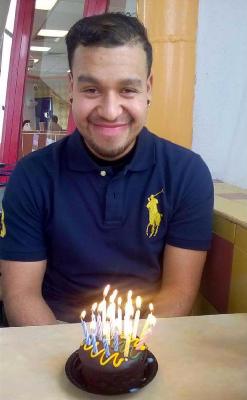
Kelly Anthony Hays, a 66-year-old white male, was a familiar figure in northwest Oklahoma City, known less as a former judge and attorney and more as the quiet soul behind the shelves of his used bookstore, 30 Penn Books. After growing up in Oklahoma City and building a respected legal career that included service as an assistant district attorney and later as a judge in Garfield County, he walked away from the law in 2000 to open the shop he loved, filling it with everything from bargain
paperbacks to rare, high-value volumes. Family and friends remembered him as intensely intelligent, gentle, and principled, someone who poured his energy into books, music, poetry, and art, and who seemed as interested in conversations with customers as in making a sale.
On the afternoon of September 14, 2017, that refuge of books became the scene of a killing. Fire crews were called to a blaze at 30 Penn Books, near Northwest 30th Street and North Pennsylvania Avenue, and when the smoke inside the cramped store began to clear, firefighters found Hays’ body beneath a pile of books on the floor, roughly a short distance inside the front of the shop. Investigators quickly determined that he had died from sharp-force injuries inflicted before the fire started, and an autopsy later documented multiple stab wounds—nineteen distinct sharp-force injuries in all—leaving no doubt that he had been attacked with extreme violence. The store’s doors were reported to have been locked, and arson investigators concluded that the fire had been intentionally set after the stabbing, transforming the beloved bookstore into a charred crime scene.
Police treated the death as a homicide from the outset, and evidence soon suggested that the attack coincided with a robbery at the store. In the days that followed, detectives canvassed neighboring businesses and transit routes for any clue to who might have gone in or out of 30 Penn Books around the time of the fire. Surveillance video from nearby establishments showed a man entering the shop and then leaving again, with footage indicating he spent about seventeen minutes inside; other images from an Oklahoma City bus route captured him walking near a bus stop not far from the bookstore shortly before the fire call came in. As word spread, customers and colleagues described Hays as having no known enemies and being the sort of owner people visited as much to talk with as to browse, deepening the sense that the killing was senseless and predatory.
Nearly a month after the murder, investigators announced that they had identified a suspect: Kenton Eugene Busby, a man with a long record of violent offenses who had been released from prison earlier that year and was on probation at the time. He was arrested on October 10, 2017, on a complaint of first-degree murder and later held without bond. Court documents and news reports indicated that Busby admitted he was the man seen in the bus surveillance video but initially denied killing Hays, even as investigators tied him to the crucial window of time inside the store.
In March 2018, the case moved toward its conclusion in an Oklahoma County courtroom. Busby entered guilty pleas to first-degree murder and first-degree arson in connection with Hays’ death, acknowledging responsibility for the stabbing and the fire that followed. Coverage of the plea hearing described Hays’ family listening as the man who destroyed their brother’s bookstore and life apologized, and as prosecutors outlined how he had attacked Hays, left him fatally wounded on the bookstore floor, and then set the blaze that brought firefighters to the scene. Under the terms of the plea, Busby faced a punishment that would keep him imprisoned for the rest of his life, closing the legal chapter of the case even as the motive for the crime remained murky and unresolved. For Hays’ relatives and the community that had gathered for years among his shelves, the resolution in court did not dispel the sense that a singular presence—a judge turned bookseller, artist, and quiet guide to countless readers—had been taken from them without reason.