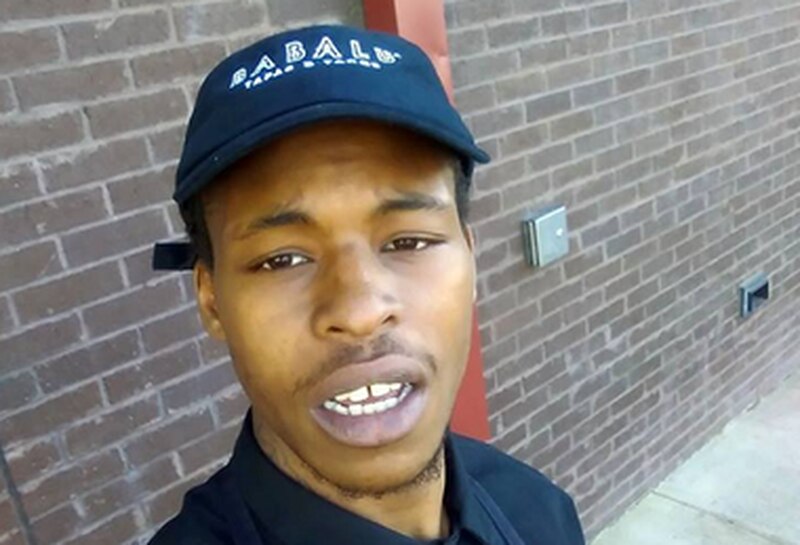
The Sunday evening air around the Circle K on Tallapoosa Street carried the usual rhythm of cars and quick stops, until it split with gunfire. Demetrius Antwan Davis Jr., a 25-year-old Black male, had been pumping gas when someone approached and opened fire, leaving him collapsed in the parking lot with his vehicle still near the pump. Police and paramedics arrived to a scene that looked frozen mid-errand—fueling interrupted, the ordinary turned sudden and irreversible—and he was pronounced
dead at the location.
Investigators quickly framed the shooting as an ambush rather than a chance encounter, describing it as a targeted attack tied to retaliation. In the days that followed, officers identified Byron Dedric Steele as the suspect and moved to take him into custody. Steele was arrested on March 28, 2023, and booked into the Jefferson County Jail in Birmingham, where the booking record reflected a capital-murder charge tied to the killing, along with a separate charge for being a prohibited person in possession of a pistol.
As the case progressed beyond the initial shock of the homicide scene, the accusation hardened into a formal prosecution track. Public reporting and case summaries indicated the state pursued the matter as capital murder, and later noted that Steele was indicted by a grand jury in February 2024, keeping the case in the courts rather than fading into an unresolved file. The legal posture—capital murder paired with the firearm-prohibited charge—suggested prosecutors were building a narrative not only about who pulled the trigger, but about forethought, circumstances, and the kind of charge that in Alabama signals the highest level of criminal exposure.
Behind the paperwork and headlines, the killing landed inside a longer family shadow that people in Birmingham had already seen once before. Accounts about the Davis family noted that his father had been shot and killed in 2018 at a different Birmingham gas station, another death described as targeted, and the echoes of that earlier loss intensified how this homicide was received—two killings, years apart, connected by familiar places and the same surname. In the wake of Demetrius Davis Jr.’s death, the focus of the investigation shifted from identifying an unknown shooter to pushing a named suspect through arrest, charging, and indictment, while detectives and prosecutors worked to turn the story of an ambush into a case they could prove in court.