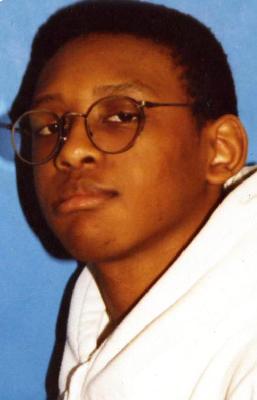
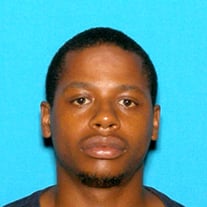
In the autumn of 1974, Jeffery Fidler was a 33-year-old man living in a city grappling with tension and change. Little is publicly known about the man he was—his work, his family, his passions, or his dreams. His name is etched not in detailed remembrances but in the stark records of an unsolved crime, a life ended violently on a street in one of Boston’s oldest and most storied neighborhoods. For decades, his story has been reduced to a few chilling facts, a name on a list of the city's cold cases, waiting for a voice to break the long silence and provide a measure of truth for a life that was taken too soon.
On the night of Sunday, November 3, 1974, the Boston Police Department received a call reporting a person shot at the corner of Water and Whopping Streets in Charlestown. The location, near the historic Boston Navy Yard and the waterfront, was in the heart of a neighborhood known for its tight-knit community and insular nature.
When officers arrived at the scene, they found Jeffery Fidler. He had been shot and was pronounced deceased. The Office of the Chief Medical Examiner later performed an autopsy and officially ruled the manner of his death a homicide. Jeffery Fidler had been murdered, but who shot him and why remained a mystery.
The investigation into Jeffery’s murder was launched in an environment that was notoriously difficult for law enforcement. Charlestown in the 1970s was a neighborhood bound by a powerful, unwritten rule: the code of silence. This deep-seated distrust of outsiders, particularly the police, meant that residents often refused to cooperate with investigations, even for heinous crimes like murder. It was a place where speaking to authorities could lead to ostracization or violent retribution. This code was a significant factor in the area's history of unsolved crimes; in the years following Jeffery's death, dozens of homicides in the one-square-mile neighborhood would also go unsolved for this very reason.
The era was also marked by the lingering shadow of organized crime. The brutal Irish Mob Wars of the 1960s between Charlestown's McLaughlin Gang and Somerville's Winter Hill Gang had left a legacy of violence that permeated the community. While the main conflict had subsided by 1974, the culture of crime, fear, and silence it had fostered endured. Charlestown had a reputation that stretched far beyond Boston, known for producing a disproportionate number of bank and armored car robbers. For detectives investigating Jeffery Fidler’s shooting, this wall of silence would have been a formidable, if not insurmountable, obstacle.
The Boston Police Department investigated the homicide, but the trail went cold. No suspects were publicly named, and no motive was ever officially released. The fundamental questions of who targeted Jeffery and what transpired on that corner of Water and Whopping Streets were lost to the neighborhood’s quiet refusal to talk. The case file thickened with time, but the core mystery remained unsolved, leaving only the certainty that a 33-year-old man’s life had been stolen.
Decades later, the murder of Jeffery Fidler remains an open and active cold case with the Boston Police Department. The city has changed, and the rigid code of silence that once defined Charlestown has weakened with time and new generations. Cold case investigators often hope that the passage of years can change allegiances and ease fears, encouraging someone with long-held information to finally come forward. As of November 2026, no one has. The Boston Police Department continues to ask for the public's help, believing that someone, somewhere, still holds the key to solving this decades-old homicide and bringing a long-overdue sense of justice to a man whose story has been left unfinished for far too long.