Crime Solvers Central
307 Cases Solved. Advancing justice for missing persons, unsolved homicides, unidentified and unclaimed remains.

Case Description

Any updates on this case? Let us know!
Summary based on 3 sources
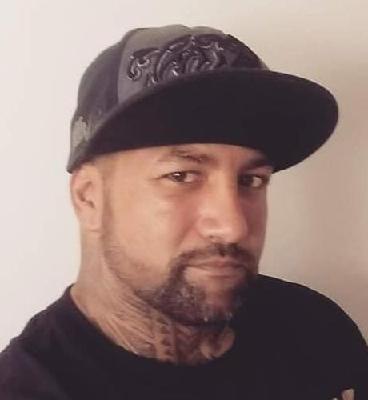
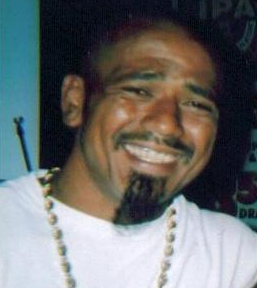
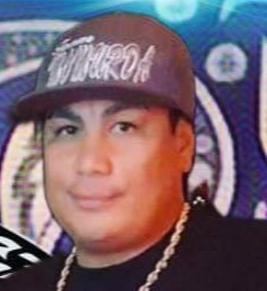
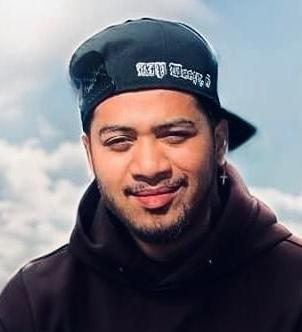
For more than twelve years, he was a mystery, a man with no name found in a remote part of Hawaiʻi Island. It was only through advances in technology that he was finally identified as Bradley Bussewitz, a 47-year-old male from Wisconsin who had found a home in the islands. Known to friends by the last name Adair, he was a man who embraced a simple life. A vegetarian, he took pleasure in growing his own food. He was also a musician, known for playing the didgeridoo, a traditional Aboriginal wind instrument. His life had taken him from the Midwest to California and eventually to Hawaiʻi, where he moved between the islands of Maui and Hawaiʻi.

On the morning of November 2, 2003, a hunter walking through a remote area off Saddle Road, also known as Route 200, made a grim discovery near the 12-mile marker in the South Hilo district. The decomposed body of a man lay in the wilderness. Police were called to the scene and immediately suspected foul play due to suspicious injuries. An autopsy later confirmed their suspicions, determining that the man had died as a result of severe blunt force injuries. The death was officially ruled a homicide. With no identification found at the scene, the victim became a John Doe. Investigators obtained fingerprints, but a search of the existing databases at the time yielded no matches, leaving his identity and the circumstances of his death unknown.

For over a decade, the case grew cold. The man found off Saddle Road remained a nameless victim in the files of the Hawaiʻi Police Department. That changed in April 2016. With significant advancements in fingerprint technology, investigators sent the victim's prints to the Hawaiʻi Criminal Justice Data Center in Honolulu for a new search. This time, they were run through the FBI’s Next Generation of Identification (NGI) database, which produced a match. The victim was positively identified as Bradley Bussewitz.

The identification gave investigators their first real break, allowing them to piece together a timeline of Bussewitz's life. They learned he had lived on Hawaiʻi Island between 1988 and 1989 before moving to San Luis Obispo, California, in 1996. By May 2003, just months before his body was found, he was living on Maui. He then returned to Hawaiʻi Island, where he lived a somewhat transient life, residing in various locations across the island, including the districts of Puna, South Hilo, Kaʻu, North Kohala, and Kona. Despite this breakthrough, the central questions of the case remained: who killed him and why.

The Hawaiʻi Police Department's Unsolved Homicides Division continues to actively investigate the murder of Bradley Bussewitz. Detectives are responsible for following up on all leads and evidence in the hope of bringing justice to him and closure to his loved ones. In launching a website dedicated to cold cases in May 2021, the department reiterated its commitment, with the police chief stating, "We have staff dedicated solely to working all leads and evidence on these older homicide cases. Our detectives are deeply committed to solving these murders and see it as their solemn duty to bring these killers to justice."

As of August 2024, the case remains unsolved, a lingering tragedy that began with a discovery on a lonely stretch of road. Police believe that someone in the community holds the key to understanding what happened to Bradley Bussewitz in the fall of 2003. They continue to ask for the public's help, emphasizing that even the smallest piece of information could be the one that finally solves the case.

Hawaiʻi Island Crime Stoppers is offering a reward of up to $1,000 for information that leads to an arrest. Anyone with information is urged to contact the Hawaiʻi Police Department's Unsolved Homicides Division at (808) 961-2380 or (808) 961-2326. Anonymous tips can also be made to Crime Stoppers at (808) 961-8300.