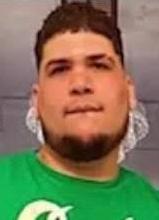
Jose Urena Moran, a 30-year-old Dominican man, was killed in Brooklyn on April 5, 2026, in a burst of gunfire that shattered Easter Sunday evening in Cypress Hills. According to multiple reports, the shooting happened just before 6 p.m. outside 2961 Fulton Street, near the elevated J train line. What began as a street confrontation appears to have turned deadly in seconds.
Surveillance video described by local outlets showed a man approaching Moran and another man on the sidewalk after an argument, then suddenly pulling a gun and firing at close range. Moran was struck multiple times and rushed to Brookdale Hospital, where he was pronounced dead. A second victim, identified only as a 50-year-old man, was also shot and was reported in critical condition.
The details that emerged afterward painted the scene as especially brazen. Reports said the gunfire erupted in front of a deli and in view of others nearby, with video allegedly capturing the shooter continuing to fire as the victims collapsed to the pavement. The violence unfolded in full public view, turning an ordinary neighborhood block into a crime scene in moments. For Moran, the night ended in a hospital emergency room; for witnesses and residents, it became one more terrifying example of how fast a street dispute can become irreversible.
Police quickly identified a suspect and made an arrest. Authorities said Michael Mendoza Cardona, 24, of Cypress Hills, was charged in connection with the shooting. The charges reported against him include murder, attempted murder, and two counts of criminal possession of a weapon. News coverage described him as the alleged gunman seen on surveillance footage approaching Moran and the second victim before opening fire. As of the latest public reporting I found, those charges had been filed, but there was no publicly reported trial, plea, or conviction yet.
What is publicly known about motive remains limited. Reports consistently point to an argument just before the shooting, but they do not appear to explain exactly what sparked it or whether the men knew one another beforehand. That leaves the story with the same harsh outline repeated so often in city violence: a brief dispute, a gun drawn in an instant, one man dead, another left fighting for his life, and a neighborhood left to absorb the shock. In the reporting that followed, Moran was not described through a long biography or a public family statement, but through the stark facts of the case and the speed with which his life was taken on a Brooklyn sidewalk.