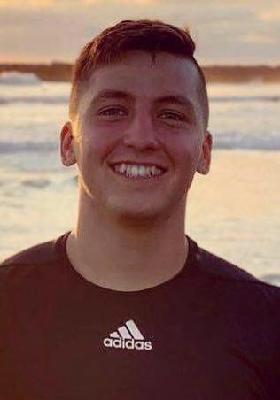
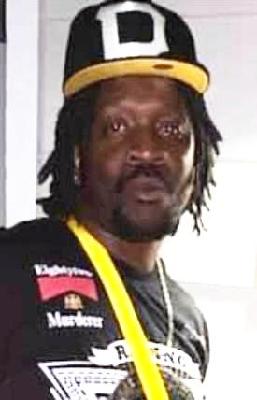
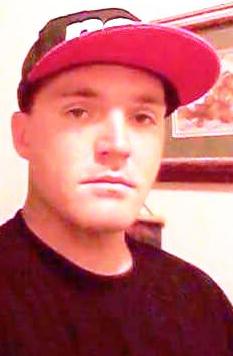
Michael Raymond Adshade was a 19-year-old male living in Arizona in 1973 when his path crossed, fatally, with two men who were drifting through the Southwest looking for drugs, money, and excitement: Douglas Edward Gretzler and Willie Luther Steelman. In Phoenix, Adshade was part of a loose circle of young adults that included his friend Kenneth Francis Unrein, whose trailer became a stopping point for visitors passing through town, among them Gretzler and Steelman.
Through Adshade and Unrein, the pair learned of acquaintances living at an Apache Junction trailer park, a connection that would later draw everyone into a widening spiral of violence.
During an earlier visit, Gretzler and Steelman had already tested the boundaries of this small social world. They arrived at Unrein's home, where Adshade was present, and at gunpoint forced the two young men to drive them to the trailer of Katherine Mestites and Robert Robbins, acquaintances of Steelman. Once there, the atmosphere temporarily softened: alcohol and drugs were shared, and for a time the evening must have felt like one more improvised gathering in the Arizona desert. But Unrein and Adshade slipped away, driving back to their residence after the visit, likely unaware that they had become central figures in the visitors' plans.
On the night of October 17–18, 1973, Gretzler and Steelman returned to Unrein's address, this time with a clear intent to take the two friends far from Phoenix. Brandishing a gun, they forced Unrein and Adshade into Unrein's Volkswagen van and ordered them to drive west. There was no dramatic escape attempt; over the long overnight drive into California, the captives were kept under control by the simple, continuous presence of a loaded weapon. Gretzler and Steelman alternated between driving and sitting in the passenger seat, watching the two young men while the van rolled through the darkness toward the Sierra foothills.
By morning, the van reached the area near Oakdale in Stanislaus County, California. After stopping for drinks, Steelman directed the group toward a remote stretch near Littlejohn Creek outside the small community of Knights Ferry. There, in a quiet creek bed away from the road, Unrein and Adshade were ordered out of the vehicle and told to walk down into the brush. At least one of them asked what was going to happen, but the answer came wordlessly: their hands and bodies were bound with cord and rope. One of the killers told them they would be left there and should wait an hour before trying to free themselves, a cruel pretense of mercy before the attack.
Once their victims were trussed and lying in the creek bed, the killers returned. Steelman partially strangled Unrein, then stabbed him repeatedly until he was dead, while Gretzler undertook the same fate for Adshade, first choking him, then driving a knife into his body. The two young men were stripped of their clothing, their bodies concealed beneath the bushes and debris of the creek bank. For days, they lay hidden in that shallow gully while the men who had killed them continued down the road in the stolen van, using it as transportation for the next stage of what would become a 17-murder spree across Arizona and California.
When sheriff's deputies finally discovered the bodies—described in contemporary accounts as lying in a remote creek bed in the Sierra foothills near Oakdale, roughly a hundred yards from the roadway—it was clear that the killings had been deliberate and brutal. The victims were reported in the press as “both 22 of Phoenix, Ariz.,” reflecting the confusion and distance between the California discovery scene and the Arizona lives the two men had led. Newspapers in Arizona later emphasized how the bodies of Adshade and Unrein had been found in a ditch in California, tying the tragedy back to the place where they had first gone missing.
Back in Arizona, the disappearances of Unrein and Adshade did not initially point investigators toward Gretzler and Steelman. The pair kept moving, committing additional robberies, kidnappings, and murders, including the killings of other acquaintances from the same Apache Junction circle, as well as strangers taken on the road. As bodies surfaced and stories from surviving hostages emerged, law enforcement began to piece together a pattern of two armed drifters traveling between California and Arizona, using stolen cars and leaving victims in their wake.
Key breakthroughs came from within the circle that had originally linked the killers to Unrein and Adshade. Investigators interviewing friends and neighbors of Katherine Mestites and Robert Robbins— themselves murdered later in the spree—heard repeated references to two men known only as “Bill and Doug,” and to a young woman from Denver named Marsha Renslow who had spent time at the trailer. When Renslow was located and confronted with graphic crime-scene photographs, she agreed to cooperate. She identified “Bill” as Willie Steelman and gave enough detail about “Doug” for investigators to trace him as Douglas Gretzler, connecting the suspects to a string of robberies, carjackings, and murders between early and mid-October.
Around the same time, California authorities reported finding an abandoned green Volkswagen van linked to the October 20 kidnapping and robbery of a teenage couple near Petaluma. The teens told police that their abductors were two men calling themselves “Bill and Doug.” A teletype sent to Arizona tied the van back to the missing Arizonan Kenneth Unrein, whose disappearance was already under investigation, and by extension to Michael Adshade, who had vanished with him. The chain of evidence—Renslow's statements, witness descriptions, motel records bearing Gretzler's name, and the recovered van—tightened the net around the two suspects and converted the mystery of the creek-bed bodies into part of a coherent case.
On November 8, 1973, the violent run ended. Gretzler and Steelman were arrested after a final series of murders in Tucson, taken into custody alive and quickly linked to the cross-state trail of death that began with the kidnapping of Unrein and Adshade. Over the following years, they were tried separately in California and Arizona, ultimately convicted of multiple counts of first-degree murder, kidnapping, robbery, and related crimes. In Arizona, both men received death sentences for two of the murders there, while California courts imposed life sentences for nine killings committed in that state. Gretzler remained on death row until 1998, when he was executed by lethal injection at Florence State Prison, while Steelman died of liver disease in prison in 1986, still under sentence of death.
For Adshade's family, the legal outcomes could not undo what had happened in that isolated creek bed. Genealogical and memorial records show him remembered under his full name, Michael Raymond Adshade, with his short life bracketed by dates that emphasize how young he was when he was taken. Those same records place his death in California and note that his remains were cremated and memorialized far from the roadside where he was found. In the end, the story of his killing became the opening chapter in what reporters later called “the greatest murder story never told”—a spree that drew national attention to Gretzler and Steelman, while the young man whose life first marked the start of their rampage remained known mostly to the people who had loved him before he ever met them.