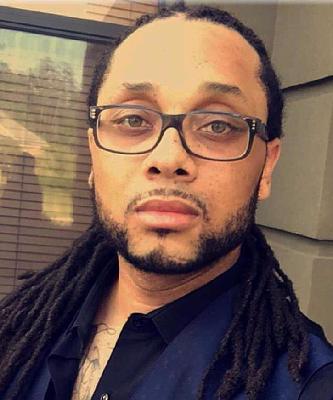
Raul Roche, 48, gender unknown, died in Kansas City, Missouri. That is all the concrete detail available here, and it feels painfully small for a life that was unquestionably larger than a line of text. A person is not a placeholder. A person is voice, habits, jokes, favorite meals, routines, people they called when something good happened, people they called when something went wrong. Yet what remains in this moment is a name and an age, and the stark fact that he is gone.
Because there are no additional details provided about the circumstances of Raul’s death—no date, no location, no public description of what happened—his story in this telling is shaped by absence. That absence has its own weight. It’s the hollow space where answers should be. It’s the kind of quiet that can make grief feel unreal, like standing in a room after the music stops and realizing how loud silence can be. When someone dies and the details are unclear, it can leave the people who cared about them trapped in a loop of questions that never settle: What were his last hours like? Was he scared? Was he alone? Did he know he was loved? Did someone fail him, or did fate turn without warning?
There is a special kind of sorrow in not being able to point to a single, clean narrative. With some losses, there is a story—there are facts that build a timeline you can hold onto, even if it hurts. But when you don’t have that, grief becomes fog. You imagine a hundred different possibilities, and each one feels like a separate wound. You try to make peace with uncertainty, but uncertainty is a moving target. It doesn’t let you rest. It doesn’t let you build a memorial out of certainty. It just keeps asking you to live with the unanswered.
What can be said with confidence is that Raul Roche mattered. He mattered before anyone ever knew his name. He mattered in the way every human life matters, in the way each day lived becomes a thread in other people’s lives. Maybe he was someone’s steady presence, the one who always showed up. Maybe he was complicated, like we all are—capable of tenderness and frustration, of generosity and stubborn pride. Maybe he carried burdens that few people saw. Maybe he had dreams that never fully got their chance. Whatever his life looked like from the outside, it was his, and it was real, and it ended.
In the absence of official details, what remains is the emotional truth that those who knew him likely felt immediately: the world changed when he died. A chair became empty. A phone stopped ringing. A name stopped appearing on the screen. A neighborhood lost a familiar face. Someone somewhere replayed memories in their mind—the last conversation, the last laugh, the last time they saw him and didn’t know it would be the last. Grief often begins as disbelief. It tries to bargain with time. It tries to rewrite the ending. But time doesn’t rewrite itself. It just moves on, leaving people behind to carry the missing.
There is also, in any death surrounded by unanswered questions, the aching need for dignity. Dignity is telling the truth, even when the truth is that we don’t know enough yet. Dignity is refusing to reduce a life to gossip or guesses. Dignity is saying his name without turning him into a rumor. Raul Roche was a person, not a headline. And if the facts of how he died are not here, then what can be offered instead is a vow of care in the telling—an insistence that he deserved to be known in full, and that the thinness of the record is not the measure of his worth.
If there are people who loved Raul, there is likely a grief that keeps showing up in small moments. It’s in the way someone still expects to see him at a familiar corner store. It’s in the way a song comes on and changes the air in the room. It’s in the way certain dates feel heavy without warning. Loss does not arrive once. It arrives again and again, in waves, in ordinary days. It arrives when you reach for your phone. It arrives when something reminds you of the sound of his laugh. It arrives when the world asks you to keep going as if a person didn’t just disappear from it.
And if, beyond this provided information, there is a case, an investigation, a set of answers waiting to be spoken, then those answers matter—not just for the sake of a file being completed, but for the sake of human beings who need to understand what happened to someone they cared about. Closure is an imperfect word; it suggests a door that can simply be shut. Real closure is more like learning how to live with a scar. But truth helps. Even painful truth helps. It gives grief a shape. It gives the living something solid to stand on.
For now, what remains is a name held up against the darkness. Raul Roche. A life that cannot be summarized by what is missing, even if that is all we have in this moment. He deserved more time, more certainty, more protection from whatever brought his life to an end. And if the world can feel indifferent in the face of a death that isn’t well documented, then the act of saying his name—carefully, respectfully—becomes a small refusal to let him vanish completely.