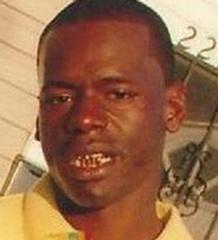
Tyrone Harvey was 28 years old, a Black male from New Orleans, Louisiana, whose life ended too soon. In a city built on rhythm and resilience, his absence leaves a silence that doesn’t settle easily—one that lingers in the places he walked, the people who expected to see him again, and the ordinary moments that now feel forever interrupted.
There are deaths that arrive with a clear story attached to them, and there are deaths that land like a heavy fog, leaving loved ones to piece together meaning from memory when the details of what happened are missing. This is one of those losses where what can be said with certainty is heartbreakingly simple: a young man is gone, and the people who knew him are left to carry both grief and questions. The mind searches for an explanation because the heart refuses to accept that someone can be here one day and suddenly become a name spoken in past tense.
In New Orleans, mourning often comes with ritual—candles, prayers, photographs held close, the gathering of family and friends who try to hold each other upright. But even the strongest traditions cannot make the pain smaller; they only help make it survivable. People remember the sound of his voice, the way he moved through a room, the specific quirks and habits that made him unmistakably himself. They replay conversations, scroll through old messages, and stumble on reminders in the most unexpected places. Grief doesn’t simply arrive; it keeps arriving, in waves, in echoes, in the unthinkable realization that time is moving forward without him.
His death is not only a private sorrow—it ripples outward. It reshapes families, changing who sits where at gatherings and who answers the phone when someone calls home. It changes friendships, because someone who once shared jokes, plans, rides, and late-night talks is no longer there to share the next one. It changes neighborhoods too, because every life is part of the larger weave: a familiar face no longer seen, a familiar name no longer called out, a gap felt even by people who can’t quite explain why it feels different.
When someone dies young, the sense of unfinished life is part of what hurts the most. There is a particular kind of grief that comes from imagining all the days that should have been his—future birthdays, new beginnings, ordinary mornings, the chance to grow older and softer around the edges, the chance to outlive mistakes and become more of whatever he was meant to be. The loss presses against the imagination, because the imagination can see the life that might have unfolded just beyond the point where it ended.
In the absence of publicly confirmed circumstances, the truth becomes something the community aches for—not out of curiosity, but out of a need for justice, clarity, and the basic dignity of knowing what happened. When details are scarce, rumors can multiply, and each whisper can wound a little more. Loved ones are often forced to do the hardest thing: grieve while still searching, mourn while still hoping, and hold onto the belief that answers exist somewhere beyond the darkness of not knowing.
Tyrone Harvey’s name deserves to be spoken with care, not as a passing headline or a statistic, but as a person whose life mattered. Even without the full public record of how he died, the gravity of the loss is undeniable. Someone laughed with him. Someone counted on him. Someone loved him in the everyday ways that become sacred only after someone is gone.
And so the story that remains is one of absence and devotion: a young man taken from the world, and the living left to honor him by remembering him—by refusing to let his name fade into silence, by holding one another close, and by continuing to seek whatever truth can still be found. In New Orleans, where memory is a kind of music, the people who carry Tyrone Harvey in their hearts will keep listening for him in all the places he should still be.