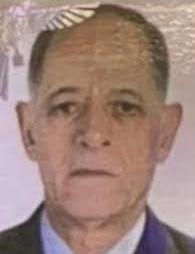
Sarecho “Sammy the Arab” Nalo was a 57-year-old man of Iraqi descent, a Detroit-born figure who had drifted through the underworld long enough to become both useful and dangerous to the people who profited from him. By the late 1980s he was tied, in various accounts of organized-crime activity, to gambling and racketeering disputes in New York City—exactly the kind of territory and tribute feuds that rarely ended with a handshake.
The nickname that followed him into court records and later reporting was less a colorful flourish than a warning label: in the circles where he moved, reputations traveled faster than proof.
On October 25, 1988, the violence found him in New York, New York, inside a travel agency where he was on the telephone when the shooting started. The call, as later recounted in case histories of the rackets involved, was connected to Spyredon “Spiro the Greek” Velentzas, a Queens-based gambling boss whose operation had been colliding with Nalo’s ambitions. In the middle of that conversation, a gunman came in and opened fire, striking Nalo as the voice on the other end of the line heard the sudden eruption of shots. The killing was portrayed not as random street crime but as an execution shaped by a business dispute—quick, purposeful, and meant to send a message to anyone watching the balance of power.
In the years that followed, investigators and prosecutors framed the homicide as a joint product of New York’s interlocking criminal networks. Testimony later attributed a central role to Peter “Fat Pete” Chiodo, a Lucchese crime family capo who became a government informant and described how the request to eliminate Nalo moved through mafia channels. In that version of events, Velentzas—fearing that Nalo was encroaching on gambling territory that generated money for higher-ups—sought outside muscle, and approval was ultimately given for the murder to proceed. The account identified Lucchese-linked figures as the men tasked with carrying it out, including Michael “Baldy Mike” Spinelli and Richard “Richie the Piece” Pagliarulo, with Spinelli described as the shooter who pulled the trigger during the travel-agency hit.
The case did not resolve in a single dramatic arrest but in the grinding, multi-count machinery of federal racketeering prosecutions. Velentzas was brought to trial and, after courtroom turns that included verdicts and retrials, was convicted in federal court of conspiring to murder and murdering Nalo in aid of racketeering activity, offenses prosecuted under the federal statutes aimed at organized-crime violence. He received a life sentence. Other proceedings in the broader organized-crime landscape also swept Nalo’s name into their record: Lucchese boss Vittorio Amuso, in separate litigation over the family’s murder program, was found guilty on charges that included ordering Nalo’s killing among multiple murders attributed to the organization’s leadership.
Even with convictions in place, the story that emerged remained layered: the triggerman, the intermediaries, and the men who benefited from the killing each occupied a different rung of responsibility. What stayed constant across the most detailed public accounts is the shape of the event itself—an argument about rackets and territory, a lure into a vulnerable setting, and a shot that ended a life while a rival listened on the telephone, leaving the travel agency and the city around it to carry on as if the machinery of power had merely corrected itself.