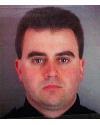
Jeffrey Roork was a 26-year-old man who went to work in Manhattan on June 19, 1995, expecting an ordinary day in a midtown neighborhood of offices, elevators, and quick lunches—unaware that a man already deep into a multiday killing spree was moving north through the city with a gun and a hunger for cash, control, and escape.
That afternoon, the gunman—identified by authorities as Darnell Collins, also known as Mwanza Atiba Kamau—closed in on a parking lot near West 26th Street
and the Avenue of the Americas and demanded money from an attendant, Jose Gabriel Escarpetta. When the attendant resisted, Collins fired three shots, killing him, then bolted on foot toward West 25th Street, slipping into a nearby building at 138 West 25th Street as the street noise carried on behind him. Investigators initially explored whether the parking-lot killing might connect to other violence, but soon concluded it was a robbery.
Inside that building, Collins headed up to the ninth floor and stepped into an elevator where Roork and architect David Roth were riding. In the confined, fluorescent-lit space—no room to run, no warning loud enough to matter—Collins shot both men in the head as the elevator descended. Roork died instantly. Police later believed the elevator shootings were meant to leave no witnesses who could identify him.
When the doors opened on the third floor, employees in a display advertising business were confronted with the nightmare tableau: two gravely wounded men and a gunman standing over them. Collins tried to force another man into the elevator with him; the man resisted, and Collins—now focused on getting out—demanded directions. He was guided to the freight elevator, rode it down alone, and disappeared onto West 25th Street before he could be contained.
In the aftermath, Roork’s death was no mystery of “who,” but a brutal chapter inside a larger spree that stretched across New Jersey and New York. Collins, an ex-con on parole, had been the subject of fresh warrants tied to restraining-order violations shortly before the violence began, and authorities traced his path through a series of robberies and shootings. Two days after Roork was killed, Collins was spotted in New Jersey, fled in a vehicle, and exchanged gunfire with pursuing officers. The chase ended under a bridge in Nutley, where Collins was shot repeatedly and later pronounced dead at a hospital—ending the case without an arrest that led to trial, and leaving the formal “closure” to come not from a courtroom, but from the abrupt finality of the suspect’s death.