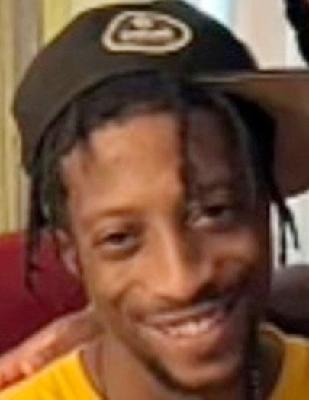
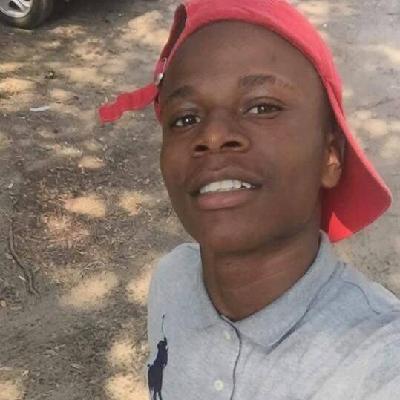
On an autumn Wednesday in 2016, 17-year-old Amarai Roper Smalls, a Black male from North Charleston, headed into a neighborhood off Ranger Drive that had already been rattled by gunfire in recent weeks. Along that stretch near Interstate 26, another young man had been killed the month before and yet another wounded in a drive-by shooting, a grim backdrop that made the sounds of sirens on the night of October 26 feel tragically familiar.
When calls came into Consolidated Dispatch a little after 8 p.m., officers were sent to the 2600 block of Ranger Drive, where they found a teenage boy lying outside a home, mortally wounded by gunfire. He was pronounced dead at the scene, and before long the coroner would confirm his name: Amarai Roper Smalls of North Charleston.
For Amarai’s family, the news shattered what should have been an ordinary school-year evening. An obituary would later describe him as “Mr. Roper-Smalls,” a son, grandson, and brother whose relatives and friends were invited to gather at a Summerville church in early November 2016 to celebrate his life. The remembrance notices and condolence messages speak of a teenager who was enthusiastic about new experiences, treated rescue animals with unusual gentleness, and left relatives and former teachers clinging to “precious memories” of his kindness and energy. Those who signed the online guest book wrote of a “beautiful child of God” and a “baby boy” who was deeply loved, capturing a portrait of a young man whose life stretched far beyond the few stark lines of a police report.
Detectives moved quickly in the hours after Amarai was found. By late that night, North Charleston police announced that they had arrested a 15-year-old juvenile in connection with the shooting. That teen was charged with murder and placed in the custody of the South Carolina Department of Juvenile Justice, his name shielded from public view because of his age. Investigators also identified a second suspect: 17-year-old Deomontae Shamarious Wallace. Wallace was charged as an accessory in Amarai’s killing, with early reports listing him as an accessory before the fact of murder and later coverage describing his charge as accessory after the fact, a legal role that placed him on the periphery of the killing but still tethered him directly to the violence on Ranger Drive.
As the case moved into the courts, Amarai’s family confronted Wallace face to face. At a bond hearing two days after the shooting, relatives packed the courtroom while the 17-year-old suspect stood before a judge. The family of Amarai Roper Smalls had come not just to witness the proceedings but to speak. His father addressed the court and asked that Wallace be given no bond, telling the judge—and the young man accused of helping in his son’s death—that Wallace had “hurt our family but didn’t break our family.” The judge denied bond, leaving Wallace in custody while he awaited trial, not only on the accessory charge in Amarai’s case but also on earlier allegations. At the time of the bond hearing, he was already facing charges from a 2015 incident in which, as a teenager, he had reportedly fired into a crowd during a dispute between groups described as rival rappers, wounding an 8-year-old boy and drawing first-degree assault and battery and weapons charges.
Over the years that followed, the criminal cases tied to Amarai’s death slipped largely out of the headlines, but public records suggest that at least one of the young men accused in connection with his killing did serve time behind bars. Inmate information for Deomontae Shamarious Wallace lists him as having been incarcerated in the South Carolina Department of Corrections, with a release date in early February 2024, indicating that a felony conviction ultimately sent him to state prison, even though the public databases do not spell out which of his cases led to that sentence. Meanwhile, details about the juvenile charged with murder remain largely sealed from public view, as is typical in South Carolina juvenile court proceedings; news accounts simply note that he was held at the Department of Juvenile Justice after his arrest, with no later open reporting about his disposition.
The ripples of Amarai’s death stretched far beyond the criminal dockets. His father, Keith Smalls, had only recently returned home after spending 19 years in prison himself, trying to repair his life and reconnect with his family. In interviews years later, he would describe how losing his only son to gun violence at 17 transformed his grief into a driving mission. Out of that pain grew a grassroots effort to prevent other families from enduring similar losses. Smalls helped create My Community’s Keeper Mentor Group, a North Charleston nonprofit that works with youth and families affected by violence, promoting mentorship, after-school programs, and community restoration. The organization has since partnered with local schools and civic groups, and has been highlighted by the College of Charleston as part of a broader push to confront gun violence through education and community engagement—an effort explicitly rooted in the memory of Amarai’s killing.
In vigils and forums held in the years since, Amarai’s name is often spoken alongside calls for change. Police and community leaders have referred back to that October night on Ranger Drive as one tragic point in a chain of shootings that scarred North Charleston, but for his family it is not just another entry in a crime log. It is the moment their son’s future was stolen and the moment that reshaped his father’s life into one of public advocacy. The arrests and eventual imprisonment of one of the teens tied to the case offered a measure of formal accountability, yet the story that lingers is not only about charges and courtrooms. It is about a 17-year-old whose life was cut short on a neighborhood street, and a family and community who have tried to turn the weight of that loss into a force for protecting other young people from the same fate.