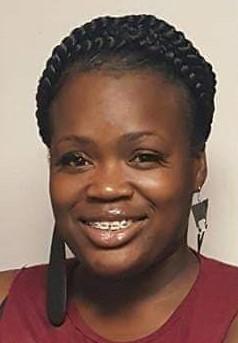
Elizabeth Camille Aldridge was a 24-year-old woman and devoted mother from the Charleston area, remembered by those who loved her as “sweet, fun, life of the party” and an “amazing mom, friend, auntie, and daughter.” On memorial pages created in her honor, friends and family describe a young woman whose world revolved around her little girl, Kenya, often calling her simply “Kenya’s mom.”
She lived on James Island, close to her extended family, and in the days after her death her obituary listed the relatives left to mourn her: her daughter Kenya Amon Brown, her father Michael Aldridge, and aunts Ashley Chestnut and Donna Hyatt.
On the evening of February 20, 2020, Elizabeth went to the Pinecrest Apartments complex off Pine Ridge Circle in North Charleston. Sometime after 6 p.m., an argument unfolded inside another woman’s apartment; according to police reports later summarized in local news, the woman told officers she had ordered Elizabeth out after accusing her of trying to steal items from the home. Moments later, in the parking lot outside, an unknown man approached. Witnesses told police they heard a gunshot and saw Elizabeth collapse beside a car. Officers arriving on scene found her lying on the pavement with a gunshot wound and tried to save her life until EMS arrived, but paramedics pronounced her dead there in the lot.
In the immediate aftermath, North Charleston police released only a brief physical description of the shooter, saying they were looking for a man described as possibly African American, wearing a brown jacket and jeans, who had fled the scene before officers arrived. For days, the killing of this young mother remained an especially raw wound in a community already familiar with gun violence. Online memorials began to fill with messages from friends who called her “a beautiful girl and a mom who loved her child so much,” and who insisted there was “no reasoning she needed to be shot.” One by one, people lit virtual candles in her name and shared memories of her sense of humor, her warmth, and the way she lit up a room.
Investigators continued to work the case, and just over two weeks later, on March 8, 2020, police announced a breakthrough. North Charleston officers said that during a separate investigation into a dispute at a hotel in neighboring Berkeley County, deputies encountered two people who quickly became central to Elizabeth’s case: Kareem Fryar and Britany Williams. As detectives compared information, Fryar was identified as a suspect in the shooting on Pine Ridge Circle. That same day, both he and Williams were arrested. Local reports state that Fryar was charged with murder and possession of a firearm during the commission of a violent crime, while Williams was charged with obstruction of justice, accused of interfering with or hindering the investigation. A bond hearing for both was scheduled for the following Monday, and a separate announcement from another station echoed that two people had been arrested in the February 20 murder of Elizabeth Aldridge, naming Fryar, then 24, as the man charged with murder.
For Elizabeth’s family, the arrests initially seemed to mark the start of a path toward accountability. But the legal road that followed appears to have been long and complicated. Public booking records show Fryar appearing again in Charleston County’s jail system in later years, facing a cluster of serious charges including murder, attempted murder, strong-arm robbery, and possession of a weapon during a violent crime, alongside other offenses. However, those records alone do not clearly state which specific incidents each charge corresponds to, and they do not by themselves confirm a final outcome in Elizabeth’s case.
A more recent summary of local court reporting, drawn from a brief syndicated notice about a North Charleston murder case, suggests that after roughly four years, prosecutors in at least one such case asked a judge to dismiss a murder charge and accept a no-contest plea to obstruction instead. In that summary, they reportedly wrote that they lacked a murder weapon, usable forensic evidence, or credible cooperating witnesses—shortcomings that made it impossible, in their view, to prove the killing beyond a reasonable doubt at trial. The snippet available publicly does not name Elizabeth or the defendant, but the timing, location, and reference to a North Charleston murder tied to an obstruction plea strongly resemble the trajectory of the charges brought in her shooting. Based on what is accessible in open sources, it appears likely that the homicide count initially filed after Elizabeth’s death was eventually dropped, leaving an obstruction conviction as the only proven offense connected to the case.
What emerges from the public record is the story of a young mother whose life was taken suddenly in the fading light of a winter evening, in a parking lot where police sirens and flashing lights replaced the ordinary sounds of an apartment complex. Elizabeth Camille Aldridge’s family held visitation at a North Charleston funeral home and laid her to rest in Payne Memorial Gardens on James Island, even as friends continued to speak her name online, lighting candles and writing messages of love and anger and disbelief. Years later, the legal system’s final accounting for what happened to her appears murky and incomplete in the record the public can see, but the portrait preserved by her loved ones is clear: a bright, outgoing young woman, deeply loved by a daughter who will grow up with memories shaped as much by grief and longing as by the joy her mother brought into their lives.