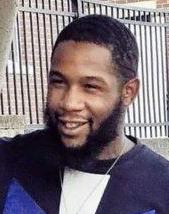
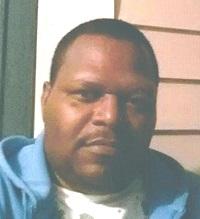
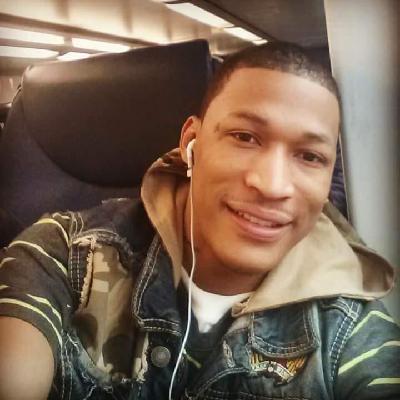
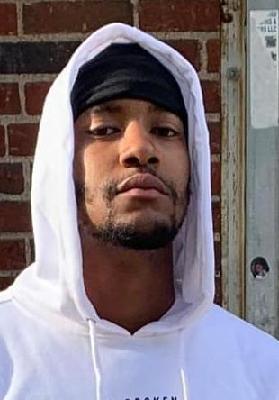
Darnell Moody was a 27-year-old Black/African American man from Newark, New Jersey, whose life ended on March 27, 2017, after a violent encounter that left a permanent absence on the streets he once called home. He is remembered in national gun-violence records as one of the many whose deaths mark Newark on the map, his name appearing with only a date and a city beside a solemn note that he was “lost to gun violence” in his hometown.
On that late-March day, Moody was found under suspicious circumstances, his condition so grave that authorities quickly recognized they were dealing with more than an accident. Case summaries compiled from police and medical findings describe a scene shaped by confrontation: shortly before he was discovered, he had been involved in an altercation, witnessed as a heated argument that escalated into violence. When the struggle ended, the damage done to his body was catastrophic.
The cause of death was formally recorded as blunt force trauma, a clinical phrase that barely hints at the force and fury of the attack that cost him his life.
Public records and gun-violence tracking sites place his death within the broader category of shootings in Newark, linking his case to a report of a 27-year-old man who died hours after a Newark shooting. At the same time, the homicide is cataloged in “death by force” archives that emphasize the brutality of the injuries rather than the specific weapon, underscoring how chaotic and violent the confrontation became by the time first responders and investigators arrived.
In the aftermath, local authorities opened a full homicide investigation. His case appears in databases dedicated to unsolved or still-scrutinized deaths, where investigators invite anyone with information to come forward, a sign that the official story of what happened remains incomplete. One line in an online case archive even muddles his story, briefly describing an arrest of a 37-year-old Newark man named Darrell Moody on aggravated manslaughter charges after a fatal beating. But that arrest, as contemporaneous news reports make clear, was tied to the 2013 killing of a different victim, Donnell Smith of Irvington, whose death also involved blunt-force trauma after an argument on Springfield Avenue. No comparable prosecutor's release or news report links any named suspect or arrest directly to the 2017 killing of Darnell Moody, and the case continues to sit in public homicide indexes without a clearly identified perpetrator.
Years later, his name endures most vividly not in court dockets but in memorial spaces. On an online national gun-violence memorial, his photograph sits above a simple line noting the date and place of his death, surrounded by virtual candles lit by people who refuse to let his memory fade; dozens of these digital flames testify that he is still thought of and still missed. In homicide registries, his profile lists only the bare facts—name, city, date, and the stark label “Death by Force”—but between those sparse entries and the quiet glow of those candles lies the story of a young life cut short, a killing whose unanswered questions still hang over Newark's streets long after March 27, 2017 passed into history.