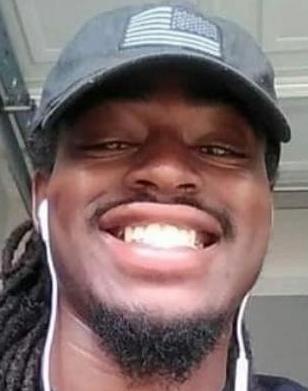
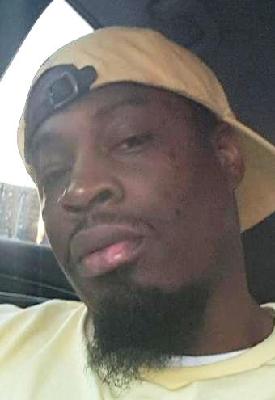
Davine Naki Wanya Shells was a 20-year-old Black American man from Newark, New Jersey, remembered by those who loved him as brave, outgoing, funny, and deeply devoted to his family. Friends and relatives called him “Poohbop,” a nickname that carried memories of shared jokes, pick-up games, and the easy smile that people mention again and again in online tributes.
He grew up in Newark schools, with ties to places like Quitman Street School, Central High School, and Gordon Parks Academy in nearby East Orange, carving out his identity as a talented basketball player and a young man whose energy drew people in. His family had already known tragedy before his death, yet those who wrote about him describe someone who still moved through the world with warmth, loyalty, and a sense of possibility that made his loss feel all the more devastating.
On the late afternoon of June 19, 2021, the first real days of summer settled over Newark’s Central Ward, and Martin Luther King Boulevard near Montgomery Street carried its usual mix of traffic and neighborhood activity. Around 5:30 p.m., that ordinary rhythm was shattered. A moving gun battle erupted along the 600 block of the boulevard, sending people scrambling for cover as shots were fired toward Davine. When police arrived, they found shell casings scattered across the pavement and Davine lying on the ground near 671 Martin Luther King Boulevard, unresponsive after being struck by gunfire. Despite the efforts of first responders, he was pronounced dead at the scene, his last moments unfolding in broad daylight on a busy city street.
Witnesses later described how, in the immediate aftermath, the chaos gave way to an eerie stillness broken only by sirens and the murmur of bystanders. Some people, still in shock, pulled out their phones and began recording what was left of the scene: police tape stretching across the block, officers pacing among yellow markers, and neighbors trying to make sense of how a young man they knew could be gone so suddenly. The Essex County Prosecutor’s Office Homicide/Major Crimes Task Force took over the investigation, announcing that they were searching for whoever had opened fire and turned a stretch of Martin Luther King Boulevard into a killing ground. For Davine’s family, those early days were a blur of grief and unanswered questions, as they tried to reconcile official briefings about a “moving gun battle” with the simple, unbearable fact that he would never come home again.
In the months that followed, the investigation moved forward until a man in his mid-twenties was arrested and charged in connection with the shooting. For Davine’s loved ones, the news that someone had been taken into custody brought a measure of relief but not real comfort; nothing could reverse what had happened on that June afternoon. Eventually, that man was convicted and sentenced to 14 years in prison. Family messages and memorial notes online reflect how this outcome landed with those closest to Davine: there is an acknowledgment that the system did, in some sense, hold someone accountable, but also a deep feeling that 14 years is painfully small when measured against the entire lifetime that was taken from him. To his mother, the sentence felt like almost nothing compared with the son she had lost, a punishment that could never truly balance the weight of her grief.
Even after the case moved from headlines to courtrooms and then into the quiet routines of prison time and parole calendars, Davine’s story has continued in the voices of the people who speak his name. Online memorials for him are filled with candles, nicknames, and fragments of memory: a brother who is missed every day, a nephew whose absence still hurts, a “young king” whose smile and presence refuse to fade. Friends write about missing his laugh and his basketball dreams, about the way he made them feel seen and understood. In these remembrances, the brutal facts of the shooting share space with a gentler image: a young man on a court or a city sidewalk, full of movement and life, whose memory endures long after the gunfire stopped and the case file was closed.