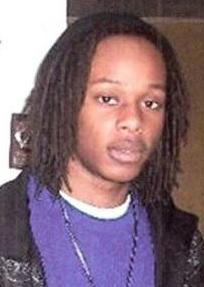
Alexander Demonta “Slugger” Brown Jr., a 19-year-old Black male from Columbus, Mississippi, grew up in a close-knit family that knew him as a bright, outgoing presence. Born on March 22, 1993, to Alexander Brown Sr. and Jacqueline Brown, he graduated from Columbus High School in 2011 and was remembered by loved ones as “lovely, strong, outgoing, caring, smart – everything you wanted in a real person.” Friends and relatives would later fill online memorials with messages about his smile, his laugh, and the way he moved through life on his toes, a restless, energetic young man on the edge of adulthood.
On Labor Day, Monday, September 3, 2012, Brown was on or near the stretch of Martin Luther King Jr. Drive and 22nd Avenue North in Columbus when an argument or tension on the street erupted into gunfire early in the afternoon. Witnesses later told reporters that a burst of shots rang out at about 2:30 p.m. in that neighborhood, sending people scrambling for cover as the sound echoed along the avenue. In the chaos, Brown was struck once, a devastating wound to his eye and head, while another man at the scene, Andre Williams, was hit in the right shoulder.
Panicked friends rushed Brown into a white Dodge Avenger and sped him to Baptist Memorial Hospital–Golden Triangle rather than wait for an ambulance. The car was left at the entrance to the emergency room, its rear door panel and discarded clothing inside soaked with blood, a mute testament to the frantic ride to try to save him. At the hospital, family members and friends gathered as doctors worked on him; early reports from those at the scene described his chances as “50–50,” a fragile coin flip between life and death that held the crowd in agonized suspense. Despite those efforts, Brown died a short time later that afternoon, just after 4 p.m., while Williams was treated for his shoulder wound and survived.
Back at the intersection, Columbus police cordoned off the block and began piecing together what had happened. Officers recovered a handgun and numerous shell casings from the scene and quickly announced that they were looking for two vehicles seen in the area at the time of the shooting: a maroon Honda and a gold-colored SUV. Detectives appealed publicly for witnesses, urging anyone who had seen the vehicles or the confrontation to come forward, and the case was immediately treated as a homicide.
Within days, investigators focused on a young man they believed to be the shooter. Columbus police charged Dominique Chambers, 19, of 2422 23rd Avenue North, with the Monday afternoon shooting that killed Brown and wounded Williams. News reports from that week described Chambers as “accused of fatally shooting a fellow teen” near the corner of 22nd Avenue and Martin Luther King Jr. Drive, and noted that he faced a murder charge in connection with the killing. A Lowndes County judge later set his bond at $500,000, reflecting the seriousness with which local authorities viewed the case and the concern that violence on that corner not be allowed to pass without an aggressive response.
At the same time, police said they were searching for a second suspect, Devin Thompson, then twenty years old, who was wanted on two counts of aggravated assault tied to the same Labor Day shooting. According to statewide coverage, investigators believed Thompson’s role in the incident was linked to the wounding of Andre Williams, and his last known address on Tabernacle Road was circulated as officers and Crime Stoppers asked the public for help in finding him. Later reporting about unrelated cases noted that Thompson had indeed been arrested on three counts of aggravated assault stemming from the 2012 Labor Day shooting in which one teen was killed and Williams was wounded, but that a grand jury ultimately declined to indict him on those charges, leaving no public record of a trial or conviction for his alleged role in Brown’s death.
For Chambers, contemporary open sources describe his arrest, the filing of the murder charge, and the imposition of the high bond, but do not clearly document what became of the case after those early hearings—whether it ended in a trial, a plea, or some other resolution in Lowndes County’s courts. What is clear from the surviving coverage and the still-active online memorials is that Brown’s killing marked a painful moment for Columbus: a young man known to family and friends as “Slugger,” remembered for his warmth and promise, cut down in broad daylight on a holiday afternoon, and a community left to wrestle with grief, unanswered questions, and the long shadow of gun violence on its streets.