Larry “Jack” Tyson was a Black man in his early thirties from Jackson, Mississippi, whose life ended on November 4, 2015, when he was killed by gunfire in his hometown. His name appears in public records and memorials as one more life “lost to gun violence” on that date in Jackson, with his death categorized among the city’s homicides for 2015.
The year he died, Jackson was struggling with a persistent tide of killings.
City officials later reported 58 homicides in 2015, a number they would cite when warning that violence was straining families and neighborhoods across the capital. Police leadership emphasized that most of those killings were not random, but grew out of conflicts and disputes that escalated into deadly encounters. Tyson’s death unfolded against that wider backdrop, another silent entry in a year when lives were being taken at a pace that alarmed residents and city leaders alike.
In the days after his killing, the public face of his story was not a detailed news report but a brief obituary and the formal notice of funeral arrangements. The Clarion Ledger carried a short death notice for “Larry ‘Jack’ Tyson” of Jackson, stating only that he had died on November 4, 2015, and that arrangements were being handled by Westhaven Memorial Funeral Home on Robinson Road, with no description of how his life had been taken or what kind of man he had been. The obituary’s sparseness is echoed by the online memorial in his name, which records him simply as “lost to gun violence” on that date in Jackson and invites visitors to light candles, share photographs, and leave messages in his memory. Over time, dozens of virtual candles have been lit there, an ongoing vigil that suggests a circle of people who knew him and who keep returning to mark his absence, even though their words are largely hidden from public view.
Beyond those memorial traces, little about the official response to his killing has been preserved in sources available to the public. The online listings that acknowledge his death as a homicide do not describe where in the city he was shot, what time of day it happened, or what circumstances led to the gunfire. They also do not name any suspect, nor do they report an arrest, criminal charges, a trial, or a conviction connected to the case. In the record that can be seen from the outside, Tyson appears as a victim whose loss was documented but not publicly resolved, his death folded into statistics and brief notices rather than into a narrative of accountability.
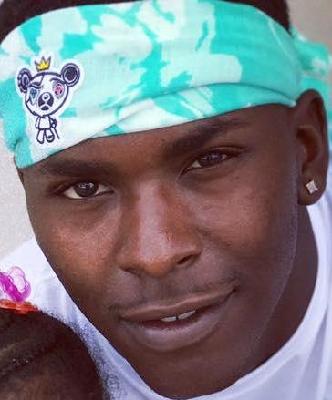
Years later, Larry “Jack” Tyson’s name remains on the roll of those killed by guns in Jackson that year, a small line in a larger story of violence in the city. Official tallies remember him as one of dozens of homicide victims; memorial pages remember him as a man whose face still looks out from a single photograph, whose loved ones continue to mark anniversaries with candles and quiet messages. Between those two versions—the statistic and the memorial—lies an unfilled space where the details of what happened, and whether anyone will ever be held responsible, are still missing from the public record.