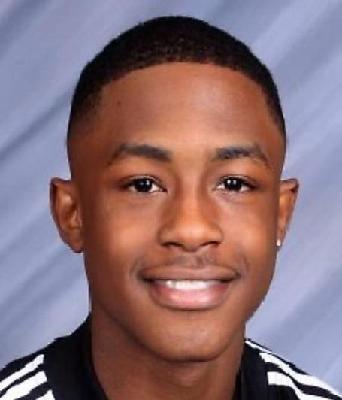
On March 17, 2014, 20-year-old Demario Johnson, a male from Jackson, Mississippi, drove into the Melrose Apartments complex on West Highland Drive in south Jackson, unaware that his ordinary trip would end in violence that would shake his family and neighbors. Later that day, officers and first responders converged on the complex after reports of gunfire. They found a tan car near a ditch, resting awkwardly with part of it up on a ledge or its side, and Demario still in the driver’s seat.
He had been shot once in the back of the head, a single, devastating wound that offered no chance to fight back or escape.
As detectives taped off the area and marked shell casings, the scene quickly became more than just another crime report. Family members who rushed to the complex told reporters that Demario had most likely been coming there to visit his girlfriend who lived in the apartments, turning what should have been a simple visit into a sudden, senseless loss. They were already weighed down with grief, having just buried another cousin the week before, and now they were standing at yet another violent death in the family, confronted with a car in a ditch and the knowledge that yet another young relative was gone.
For residents of the Melrose Apartments, the flashing lights and police presence were grimly familiar. People living there described the killing as part of a pattern they had come to dread. One resident, speaking to local media, said that this was at least the second time someone had been killed in the complex, recalling another slaying “in the back” of the property a few years earlier. Others complained that the complex had security on paper but not in practice, insisting that if security had truly been doing its job, this might not have happened. Their words painted a picture of a community that felt exposed and unprotected, where the sound of gunfire and the sight of crime-scene tape had become terrifyingly routine.
Jackson police opened a homicide investigation, but in the early days there was little for them to share with the public. Officers told reporters that they had not made any arrests and were still working on leads, emphasizing that they did not yet know whether Demario lived in the complex or had simply driven in that day. In another broadcast from the scene, the department was described as having no solid leads and no suspects in custody, underscoring how little was known about who had walked up to that car and pulled the trigger. Detectives appealed to the public for help, urging anyone with information to contact Crime Stoppers, hoping that someone in the apartments had seen or heard something that could break the case open.
Over time, Demario’s name found its way onto online memorials to gun violence victims, where he is remembered simply as a young man lost to gunfire in Jackson on March 17, 2014. Those memorials link his death to local news coverage and to listings of 2014 homicides that remained under investigation, reflecting how his killing became one of several unsolved shootings that year rather than a case neatly closed by an arrest and a trial. Public reporting does not document a suspect being identified, charged, or brought before a court for the shooting at Melrose Apartments, leaving Demario’s death suspended in that painful space where the questions of who and why still hang unanswered over the complex, his family, and a neighborhood that had already seen too much bloodshed.