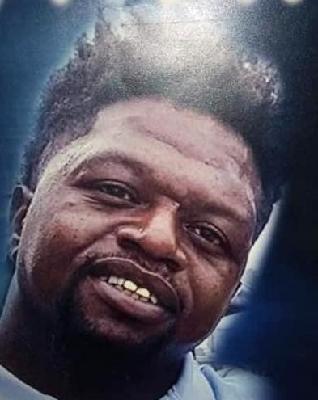
Mario Dontaye Ledbetter was a 39-year-old Black man from Jackson, Mississippi, whose life had long been rooted on Powell Rhodes Drive, the same street where it came to a violent end on May 13, 2019. Friends and relatives knew him by the nickname “Oneway,” a man with a big personality who, as mourners later wrote, could be “goofy” and “the highlight of your night.” Online memorials and obituary notices describe a tightly knit family around him, including children, his father, and a circle of siblings, nieces, and extended relatives who would gather in churches and funeral homes days later to say goodbye.
That Monday afternoon, just after 2:30 p.m., Jackson police were called to the 800 block of Powell Rhodes Drive. Officers arrived to find Ledbetter lying on a porch, unresponsive and suffering from multiple gunshot wounds. He was pronounced dead at the scene. As investigators worked, family members and neighbors crowded the street; cell phone video captured anguished relatives clashing verbally with officers, emotions boiling over in the heat of another killing. A nephew identified himself to reporters, calling the victim his “mama’s baby brother” and pleading for an end to the cycle of violence, saying he was simply tired of all the killing and wanted people to pray instead of fight. Neighbors told reporters that Ledbetter was a father and had lived on that short stretch of Powell Rhodes Drive for virtually his entire life, making his death on his own doorstep feel especially cruel.
As detectives canvassed the area, they learned that another man with a gunshot wound had arrived at a local hospital in a private vehicle. Police believed that this second victim, a 42-year-old, had been wounded in the same burst of violence on Powell Rhodes Drive, though his exact role in the encounter was not immediately clear. While they sorted through conflicting accounts, officers focused on reports that the shooting followed an altercation between Ledbetter and another man only moments earlier. By the next day, Jackson police announced that a suspect had surrendered himself. Joseph Kelly, 42, walked into police custody and was identified publicly as the man investigators believed was responsible for the fatal shooting. He was charged with murder, and officers said they recovered a firearm from the scene. Police described the events in careful terms, saying that Kelly and Ledbetter had gotten into “some kind of fight” just before shots were fired, but they did not immediately spell out a detailed motive. At that stage, Kelly remained in custody awaiting his initial appearance in court, and public reporting did not yet track what ultimately happened with the case against him.
The story of what led up to the killing was complicated by Ledbetter’s own unresolved case. Less than two years earlier, in October 2017, Jackson police had arrested him in another homicide, this one a fatal stabbing on Derrick Street. Officers responding there found 36-year-old Jason Madison unresponsive with multiple stab wounds; Madison died at the scene. Investigators identified Ledbetter as the suspect and charged him with Madison’s murder, marking what local media counted as the city’s 49th homicide of that year. By May 2019, Ledbetter was out on bond in that case and was scheduled to appear in court on May 20, just a week after he was gunned down. The city’s police chief acknowledged this history, noting publicly that the victim had been awaiting trial in the earlier killing, but he also said he could not confirm whether the shooting on Powell Rhodes Drive was an act of retaliation or connected in any direct way to the Derrick Street case. That uncertainty left a grim tangle of allegations and unanswered questions hanging over both deaths.
In the days that followed Ledbetter’s death, the immediate shock on Powell Rhodes Drive gave way to more formal rituals of mourning. Family and friends gathered for visitation hours at a Jackson funeral home before a church service at Greater Mt. Mariah Missionary Baptist, where relatives listed in the obituary—children, a father, sisters and a brother, a “special niece,” and a host of aunts, uncles, and cousins—came together to remember him in prayer, music, and eulogies. Online, candles were lit in his name on a national gun-violence memorial site, where people who knew him described a man who was “just trying to make it” and “such a cool dude,” their brief messages hinting at a complicated life that included joy, trouble, and responsibility in equal measure. The case against the man accused of killing him moved into the slower world of courts and dockets, but for the people on Powell Rhodes Drive, what remained most vivid was not the legal process but the image of a familiar porch now marked forever as the place where a neighbor, relative, and friend fell.