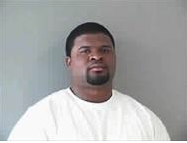
On a Saturday evening in May 2017, 19-year-old Daquan Hura, a Black male from Tulsa, Oklahoma, went to the Mohawk Manor Apartments in north Tulsa, an unremarkable complex near Mohawk Boulevard that would become the scene of his final moments. Around 6 p.m., police were called there for reports of a shooting. When officers entered one of the apartments, they found Daquan lying on the living room floor with a gunshot wound to his chest.
The injury was from a single shotgun blast, and he was pronounced dead at the scene, his life ending in the middle of an ordinary living space that still held the quiet details of everyday life.
Neighbors later described hearing one sharp report cut through the evening, a lone gunshot that drew people from across the parking lot. One witness said she walked toward the apartment and saw a foot sticking out from the doorway before hurrying away to get her phone and call 911. When she returned, she found Daquan on the floor inside, and on the stairway just to the right of the front door she saw a man sitting with a shotgun in his hands. According to the account in the arrest report, he told her to “get out of here,” and she ran back outside to wait for officers to arrive, leaving behind a scene that would soon be marked off by crime-scene tape and floodlit by patrol cars.
As detectives and patrol officers spread out around the complex, the search for the gunman moved into the fields behind Mohawk Manor. A K-9 unit tracked a man through the grass and brush and led officers to 26-year-old Chase Franklin Stewart, who was taken into custody without further violence. Police reports and booking documents state that Stewart was arrested on a first-degree murder complaint in connection with the shooting, along with outstanding warrants for aggravated speeding, no proof of insurance and driving without a license. He was booked into the Tulsa County Jail, where records noted that this was being treated as one of Tulsa’s homicides for the year.
Inside the interview room, the narrative of what had happened began to split into competing versions. Investigators said witness accounts suggested an argument between the two men had led up to the shooting, a dispute that escalated until the shotgun was fired in the close confines of the apartment. Stewart, according to the arrest and booking report, told detectives that he believed Daquan was armed and claimed he fired in self-defense because he feared for his life. He also told officers where he had hidden the gun used in the shooting, allowing them to recover the weapon. At the time, police emphasized that the case was still an active investigation, and available public reporting focuses on the initial arrest and charging decision; later court proceedings and the ultimate legal outcome have not been widely documented in accessible news coverage, leaving the formal resolution of the case largely outside the public eye.
In the months and years that followed, Daquan’s name did not vanish from the community’s memory. He is remembered on national gun-violence memorial sites, where loved ones and strangers alike light virtual candles and leave brief messages about a life taken too soon and the senselessness of losing someone over an argument and a single trigger pull. In 2019, at a Day of Remembrance ceremony at Chandler Park for families of violent-crime victims, his mother, Shetta Miller, stood among others who had lost children and siblings and spoke of him as “our somebody, our someone,” words that captured the way his absence still echoed through their lives. The gathering was meant to reassure grieving families that the justice system had not forgotten their cases, but it also underscored a deeper truth: behind the statistics and case numbers, Daquan’s death was not just one more entry in a homicide ledger. It was the sudden erasure of a son, a relative, a friend, whose story now lives on mostly in brief news items, official reports, and the memories of the people who loved him.