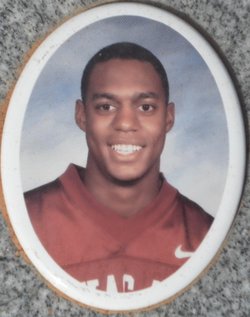
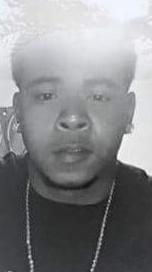
Armani Keon Combs, a 16-year-old Black male from Oklahoma City, spent the afternoon of June 23, 2020, at his northwest-side apartment complex, a place that had been part of his everyday routine. It was early summer, and he was sitting on the stairs when another teenager came looking for his 12-year-old sister, turning an ordinary day into one that his family would remember only in fragments of panic and disbelief.
By that evening, Armani’s name would be attached to another statistic in a year of rising homicides, but to the people who loved him he was still just a child on the stairs, caught in a confrontation he never expected to end with a gunshot.
According to accounts later shared by his family, the visiting teen asked about Armani’s younger sister, setting off an argument that escalated into a fight. Witnesses told his mother that the boys struggled, and in the middle of that struggle the other teen drew a gun. In a moment that unfolded faster than anyone could react, the shot that rang out on the stairwell left Armani bleeding in the place he had been quietly sitting just moments before. For those who heard about what happened, especially through his family’s appeals, the story was not just about a dispute between teenagers but about a brother trying to protect a younger sibling and paying for it with his life.
Police and emergency responders were called to the apartment complex near Northwest 105th Street and Western Avenue around 1:40 p.m. that Tuesday. Officers found the wounded teenager and rushed him to a local hospital, but despite efforts to save him, he was pronounced dead shortly afterward. News reports described officers and detectives moving through the complex for hours, talking to residents and piecing together how an argument outside an ordinary Oklahoma City apartment building had become a homicide. The location—an unremarkable stretch of northwest Oklahoma City near Hefner and Western—was suddenly transformed into a crime scene marked by evidence markers, police tape, and the sound of a grieving family arriving to learn what had happened.
His mother, Kristy Combs, later spoke about arriving to find out that her son had been killed, describing him as someone who “didn’t bother anybody” and who died while trying to do the right thing. A GoFundMe campaign she organized the day after his death, “Justice For Armani,” framed the shooting as senseless violence between boys who even shared the same skin color, underscoring her disbelief that someone so similar to her son could turn a weapon on him. In television interviews, family members repeated that he died while standing up for his sister, and local coverage highlighted their plea that the public help find the person responsible. Their words painted a picture of a protective, loyal child whose final actions were driven by concern for family rather than by any desire for conflict.
In the days after the shooting, detectives with the Oklahoma City Police Department appealed for information, stressing how much they needed tips from the community. Early reports noted that there was no clear description of the shooter, only that another teen had been involved in the fight that ended with the fatal gunfire. KOKH’s coverage recorded that no arrest had been made and that investigators could not yet offer the public a suspect description, even as they released the location and time of the shooting and asked anyone who knew more to call the homicide tip line. Years later, case-compilation sites still list Armani’s killing among violent deaths in Oklahoma City and explicitly invite the public to send in updates, with no public record of a suspect being charged. Taken together, those sources indicate that, as of the most recent updates, authorities have not announced any arrest or named suspect in connection with his death, and the case remains publicly unresolved.
Behind the headlines, Armani’s death left a sprawling family suddenly reconfigured around loss. Obituary and memorial records describe him by his full name, Armani Keon Combs, and place his birth in February 2004 and his death on June 23, 2020, with burial at Riverside Gardens Cemetery in Oklahoma City. He is listed as being survived by his mother, numerous brothers and sisters, grandparents, and a broader network of relatives, as well as legal guardians who had helped care for him in the years before he died. Those notices, along with the photos and comments on memorial pages and fundraising sites, sketch the outlines of a boy embedded in a large, complicated family that now gathers around a gravesite instead of a front-room couch or apartment stairwell. For them, the crime is not only an open police file but a permanent absence, a space at family events and in everyday routines where a teenager once stood up for his sister and never came home.