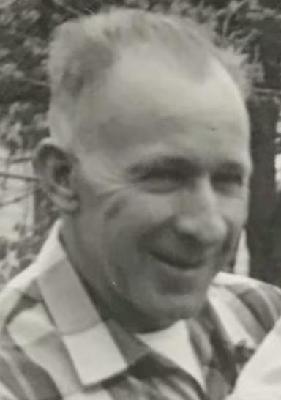
Frank Jerald Frye, a 63-year-old White/Caucasian man, was a longtime Appleton resident and retired law-enforcement officer whose murder in the early morning hours of December 21, 1969, became one of the Fox Cities' oldest unresolved homicide cases. Frye had joined the Appleton Police Department in June 1937 and was promoted to detective sergeant in 1947. He spent more than two decades in law enforcement before retiring from the department in 1959. Retirement did not keep him from working, however, and he eventually took jobs as a motel clerk and night watchman, including at the Embassy Motor Lodge near what was then U.S. Highway 41 and County BB in the Town of Menasha area.
The day before his death appeared ordinary. On December 20, Frye and his wife, Rose, visited with family at their Appleton home. Frye's work shift at the Embassy was scheduled to begin around 2:00 a.m., so he went to bed early. Later that evening, at approximately 8:30 p.m., Rose received a telephone call that would become an unsettling detail in the case. An unidentified man asked whether he had reached the home of the Frank Frye who worked at the Embassy. Rose confirmed that he had but, not wanting to wake her husband, told the caller that Frye was already at work. According to family accounts, the caller then abruptly replied that he must have the wrong number and hung up. The identity of that caller and whether the call had any connection to the murder were never established.
When Frye left for work several hours later, he reportedly carried his gold police retirement badge, an item he normally kept at home. Why he decided to take the badge with him that particular morning remains unknown. He arrived for his overnight duties at the Embassy Motor Lodge, where his responsibilities included watching the property and handling motel business during the quiet early-morning hours.
At approximately 3:00 a.m., a motel guest reportedly checked in. Nothing was heard that suggested a violent confrontation, and there was apparently no obvious struggle inside the motel. By around 5:30 a.m., however, another employee or security worker realized Frye was missing. Money had also disappeared from the motel. Investigators determined that approximately $263 had been taken, although other money was left behind. The circumstances led authorities to suspect that Frye's disappearance was connected to a robbery, but the fact that the entire available amount had not been taken added another unanswered question to the investigation.
Miles away from the motel, a motorist named Jon Friedrich was traveling near Zittau in northern Winnebago County when he noticed what initially appeared to be an injured deer lying near a roadside ditch. After stopping, he realized that what he had seen was a human body. With no cellular telephones available in 1969, he went to a nearby farm and contacted authorities.
The dead man was identified as Frye. He had suffered a devastating gunshot wound to the abdomen. Contemporary accounts described the weapon as a shotgun and indicated that he had been shot at extremely close range. The evidence indicated that Frye had been removed from the motel and taken away from the place where he had been working. The lack of a reported gunshot or obvious struggle at the Embassy strengthened the belief that the fatal shooting occurred elsewhere, although the precise sequence of events between Frye's disappearance and the discovery of his body has never been conclusively established.
Investigators developed the theory that Frye had been abducted during a robbery or attempted robbery at the motel and subsequently murdered. What remains unclear is why the killer or killers took Frye with them rather than simply fleeing after taking the money. His background as a former police detective also raised questions about whether he recognized whoever confronted him, whether the offender feared he could later make an identification, or whether something beyond an ordinary robbery was involved. None of those possibilities has ever been proven.
Frye had encountered dangerous people during his years as a police officer and had reportedly received threats during his career. Family accounts recalled incidents years earlier in which individuals he had arrested threatened him and his wife. Despite that history, there is no established public evidence tying any of those earlier threats to the 1969 homicide, and authorities have never publicly identified one of those individuals as Frye's killer.
The unusual telephone call to Frye's home before his shift also remained unresolved. The caller apparently knew both Frye's name and where he worked, yet ended the conversation after being told Frye was supposedly already at the Embassy. Whether the caller was simply trying to reach him, attempting to determine his whereabouts, or had no connection whatsoever to what happened later remains unknown.
Frye was buried after a funeral held on Christmas Eve, only three days after the killing. His murder left his family with decades of unanswered questions, particularly because the crime occurred immediately before Christmas and because the circumstances surrounding the robbery, disappearance and roadside shooting never formed a complete explanation.
Over the years, the Winnebago County Sheriff's Office and other local investigators repeatedly revisited the case. Detectives pursued tips, reviewed the original reports and interviewed people whose names surfaced during the investigation. Authorities later reported that investigators had spoken with everyone they could identify who was still alive and had exhausted the known leads available to them.
Physical evidence was also reconsidered as forensic technology improved. Items associated with the crime were subjected to DNA testing, but the testing did not produce evidence that identified Frye's killer. Investigators subsequently consulted laboratories about newer methods capable of recovering information from old or degraded DNA, recognizing that advances in forensic science might eventually provide another opportunity to examine evidence preserved from the case.
No person has been publicly identified as the proven killer of Frank Frye, and available accounts do not show that anyone was arrested, formally charged, tried or convicted for his murder. Investigators have acknowledged that some people who may have been suspects or possessed important information have died during the decades since the crime. Despite that passage of time, the killing has remained an active cold case, with law enforcement continuing to hope that surviving witnesses, previously reluctant sources, or improved forensic testing could someday explain who abducted Frye from the Embassy Motor Lodge, shot him at close range and left his body along a rural Wisconsin road.