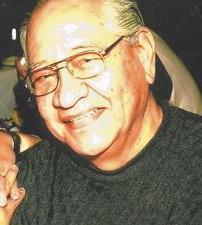
David Lacey, a 42-year-old male taxi driver from Phoenix, Arizona, whose race and ethnicity are not clearly documented in public records, was working a routine shift in mid-April 1992 when he crossed paths with a pair of young men already in the middle of a violent crime spree. In the days before his death, 19-year-old Chad Alan Lee and his 14-year-old accomplice, David Scott Hunt, had lured Pizza Hut delivery driver Linda Reynolds to a vacant house, abducted, robbed, sexually assaulted, and
murdered her on April 6, 1992. Later in the month they would go on to rob and kill convenience store clerk Harold “Harry” Drury, turning April 1992 into a three-week sequence of robberies and murders that terrorized parts of Maricopa County. Lacey’s killing became the middle crime in that series, and unlike the others, it unfolded inside the confined space of his taxicab.
Shortly after midnight in the early hours of April 16, 1992 Lee used a payphone outside a Phoenix convenience store to call Lacey’s taxi company and request a cab. Lacey’s Metro Taxi cab was dispatched to the location, while Hunt waited nearby in Lee’s car so they could execute a planned robbery once the driver arrived. When the cab reached the rendezvous point and Lacey turned in his seat to take payment, Lee drew a revolver and demanded money. According to Lee’s later account, Lacey tried to grab the gun, and Lee responded by firing nine shots inside the taxi; four bullets struck Lacey. Lee then took about forty dollars from Lacey’s pockets, dragged his body out, and dumped him by the side of a road before driving off in the cab. With Hunt following in Lee’s car, they moved the taxi to a dirt road, where Lee shot out its windows and tires and rifled through its contents. When they abandoned the vehicle, Lee accidentally left behind his cigarette lighter and a bloodstained receipt bearing his fingerprint—crucial pieces of physical evidence that would later tie him directly to the murder.
Investigators quickly recognized similarities between Lacey’s killing and the earlier murder of Linda Reynolds—both involved isolated locations, small cash hauls, and distinctive damage to vehicles at or near the crime scenes. A patrol officer who had seen shoeprints publicized in connection with the Reynolds case noticed that prints at the Lacey scenes appeared to match, prompting the Phoenix Police Department and the Maricopa County Sheriff’s Department to combine their investigations. Police obtained ATM surveillance footage showing Reynolds with Lee at a cash machine, and they traced a distinctive Hawaiian pizza order used to lure her to a previous order placed from the home of Hunt’s stepmother. That lead brought detectives to an address where both Lee and Hunt were staying. Around the same time, forensic work matched the bloody fingerprint on the receipt found in Lacey’s abandoned cab to Lee. When officers tried to track them down again, they discovered the pair had left town with their girlfriends. Within days, police in Oak Creek Canyon near Flagstaff stopped Lee’s car in connection with another armed-robbery investigation and took Lee and Hunt into custody. During a series of interviews over the next few days—each preceded by Miranda warnings—Lee confessed in detail to the robberies and murders of both Reynolds and Lacey and led officers to a remote campsite where he had burned his shoes and hidden the. 22-caliber rifles and knife used in the crimes, further solidifying the case against him.
On the basis of that evidence, a Maricopa County grand jury indicted Lee on multiple counts, including first-degree murder and armed robbery for the killing of David Lacey. In a 1994 trial often referred to as “Lee I,” he was convicted of first-degree murder in the deaths of Linda Reynolds and David Lacey, along with kidnapping, sexual assault, armed robbery, and theft counts tied to the Reynolds case and armed robbery for the Lacey robbery-murder. The trial judge imposed death sentences for both murders and additional consecutive prison terms for the non-capital crimes; in a later, separate proceeding Lee received another death sentence for the murder of Harold Drury. The Arizona Supreme Court later affirmed his convictions and death sentences on direct appeal, and subsequent state and federal challenges—including a federal habeas corpus case—have so far left his sentences intact. Today, Lee remains on death row in the Arizona State Prison Complex–Eyman in Florence.
Lee’s teenage accomplice, David Scott Hunt, was likewise identified as a participant in the robbery and murders and became a key suspect alongside Lee. Because Hunt was only 14 at the time of the killings, he was not eligible for the death penalty under U.S. Supreme Court precedent. Instead, he received two life sentences for his roles in the murders of Linda Reynolds and David Lacey and, years later, a third life sentence after he was convicted of participating in the killing of another inmate while already incarcerated. With Lee on death row and Hunt serving multiple life terms, authorities consider the case of David Lacey’s murder solved, with no other suspects publicly identified or sought in connection with his death.