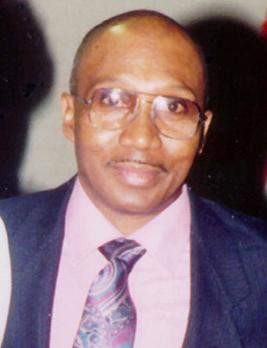
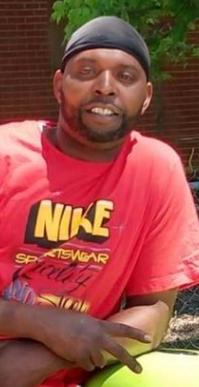
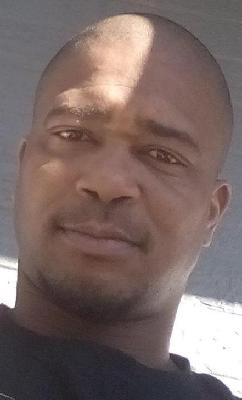
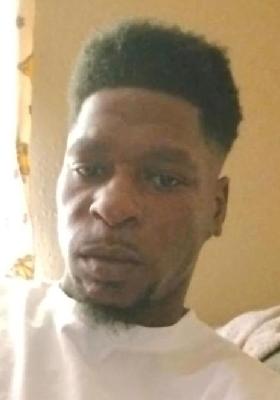
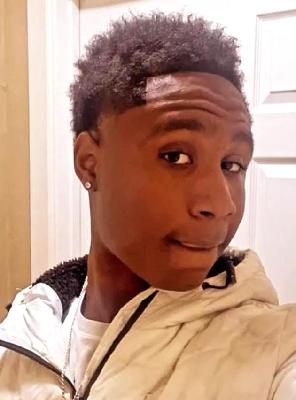
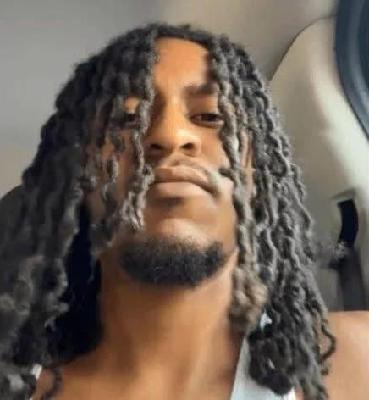
Tyjuan Jones was a male from Jones County, Mississippi, whose life was cut short by gun violence on June 24, 2023. That single date and place stand like pins on a map, marking the moment when an entire future was divided into a before and an after. Before that day, he was more than the few words that now exist in public record; he was a person with routines, thoughts, and relationships, a familiar presence in someone’s life.
After that day, his name became a symbol of loss and a reminder of how abruptly everything can change.
The bare facts that remain are painfully simple: on that summer day in Jones County, a gun was fired, and Tyjuan did not survive. There is no widely available account of the exact street or setting, no description of the weather or the time of day, no official explanation of what led to the violence. The story, as it has been recorded, begins and ends with his death, leaving a wide, aching silence where details should be. That silence does not mean nothing happened; it means what happened has not been fully carried into the light where others can see and understand it.
Somewhere, there were people who learned about his death not from a line of text on a page, but from a phone call, a knock on a door, or a hurried conversation that could barely find the right words. For them, June 24, 2023 is not just a date attached to a county name; it is the day the air felt heavier, the day ordinary sounds seemed too loud or too quiet, the day life rearranged itself around absence. They might remember what they were doing when they first heard, how the world seemed to slow down for a moment as the reality of it sank in.
The public record does not speak of who Tyjuan loved, who depended on him, or who laughed with him. It does not say whether he was the kind of person who filled rooms with noise and stories, or someone who moved more quietly through the world, noticed deeply by the people closest to him. Those missing details do not make him any less real; they simply highlight how much of a person’s true self lives in memories, not in the lines of an incident report or a database entry. Somewhere, there are people who do not think of him as a “victim” first, but as a son, a friend, a relative, or a neighbor, and who carry their own private versions of his story.
What is known publicly about the investigation is even more limited. There are no widely reported accounts of a suspect being named in connection with his killing, no public announcements of arrests, charges, or court proceedings. There is no documented suspect whose name has become tied to his, no outline of a trial that could offer a measure of accountability. The case, as it appears to anyone looking from the outside, sits suspended in uncertainty. Questions hang in the air: who was responsible, what led up to that moment, whether it was a sudden outburst or something that built over time. Those questions remain unanswered in the sources that exist.
Living with such uncertainty is its own kind of wound. For those who cared about him, the lack of clear information can make grief feel unfinished, as if the story has been paused mid-sentence. Without a known suspect, without a clear narrative, it becomes harder to find any sense of closure. People may replay the same limited facts in their minds, trying to imagine what happened in those final moments, wondering if there were signs that went unnoticed or choices that might have altered the outcome. Even for those who only learn of his death through public records, the absence of resolution is striking—a reminder that not every act of violence is followed by answers.
Yet even when the public story is thin, the emotional weight of a life lost remains heavy. Tyjuan’s name, preserved in lists and memorial entries, carries with it the unspoken truth that he should have had more time. More mornings to wake up and step into whatever routine shaped his days. More chances to change, to grow, to surprise the people who thought they already knew everything about him. More ordinary, forgettable moments that, in hindsight, become precious. His death is not just a statistic; it is a doorway that closed too soon, leaving those who knew him standing on the threshold, looking into a future where he no longer appears.
In communities touched by violence, each loss like his sits alongside others, forming a quiet, ongoing grief that may not always make headlines but is felt in small, everyday ways. An empty chair at family gatherings. A name that comes up in conversation and hangs there for a moment longer than it used to. A familiar face missing from places where it once appeared regularly. These are the spaces where his story continues, even if the legal or investigative side of it remains unresolved.
The lack of public detail about what happened to Tyjuan does not diminish the seriousness of his death; if anything, it underscores the way some tragedies quietly recede from broader attention, even as they continue to shape the lives of those closest to them. His story, as it can be told from what is known, is a story marked by absence—of information, of resolution, and most of all, of a person whose presence can no longer be taken for granted. All that remains in view is his name, the place he was from, the date of his death, and the knowledge that gun violence stopped his life on a day that likely began like any other.
In the end, the heart of his story is simple and devastating: on June 24, 2023, in Jones County, Mississippi, a man named Tyjuan Jones was taken from the world by a gun, and the record of what followed has not yet caught up with the full weight of what was lost. Behind the sparse public facts, there is a network of people who once moved through life alongside him, now learning to live with a space where he should still be.