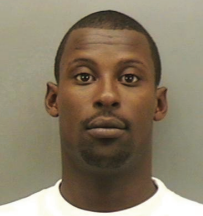
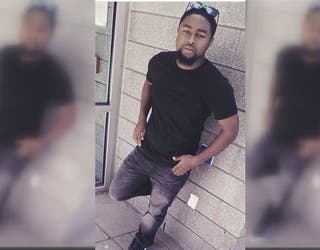
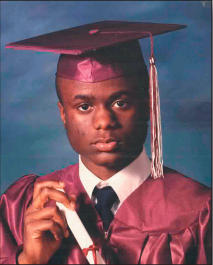
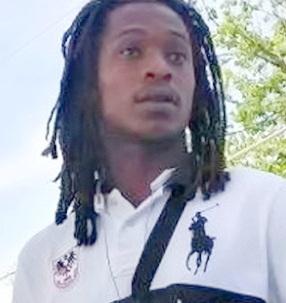
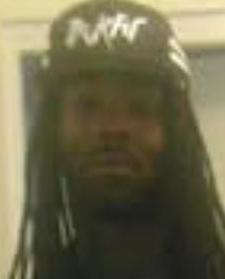
Do you know who murdered Jamie Byrd? On the afternoon of October 6, 2001, Jamie H. Byrd, an African-American man from Washington, D.C., was standing outside a residence in the 1800 block of Irving Street NE when gunfire tore through the quiet of the day and left him mortally wounded on the sidewalk. The Metropolitan Police Department later recorded that he was shot to death directly in front of 1814 Irving Street NE, a rowhouse on a residential block, at around 4:40 p.m., turning an ordinary Saturday into the moment his life
ended.
Officers from the Metropolitan Police Department responded to the scene that afternoon, but by the time the initial rush of emergency activity subsided, the damage was irreversible: Jamie Byrd had been pronounced dead, and the block on Irving Street had become a homicide scene. Police described the manner of death simply and starkly in their public bulletin and subsequent reward poster: he had been shot to death in front of the address, and investigators were seeking any information that could explain who had opened fire and why. The case was assigned to the department's Violent Crimes Branch, signaling that detectives believed the circumstances warranted a full, long-term investigation rather than a quickly resolved incident.
Behind the brief official language was a man whose absence rippled through a family. An obituary in the Washington Post remembered him as Jamie H. Byrd, a husband and father. He was survived by his wife, Jennifer A. Byrd, and their son, Jamal, as well as his parents, Phyllis and John Byrd. The notice also named his siblings — a brother, Rodney, and two sisters, Tammie and Davida — along with “a host of other relatives and friends,” suggesting a wide circle of people who felt the loss when he did not come home that night. In the days that followed, loved ones gathered first at a viewing at Johnson and Jenkins Funeral Home in Northwest Washington, and then traveled to Nathalie, Virginia, where his funeral service and interment were held at Sunflower Baptist Church, giving his family a place away from the crime scene to say their final goodbyes.
As the mourning period passed, the investigation settled into the slower, more grueling phase of a cold case. Public summaries of the homicide emphasize that it remains unsolved: there is no record of any suspect being named, arrested, or charged in connection with the shooting, and the responsible individual or individuals have never been publicly identified. Crime cold case listings and the police department's own notice both stress that detectives are still appealing for information from anyone who might have seen something that afternoon or heard details afterward that could break the stalemate.
In an effort to stir new leads, the Metropolitan Police Department issued a reward poster offering up to $25,000 for information leading to the arrest and conviction of whoever killed Jamie Byrd. That poster, like the online homicide notice and the cold-case profile, continues to stand as a kind of promise to his family: that the case is not officially forgotten, and that the department still wants to know who fired the shots on Irving Street. Yet even as of the latest updates in 2025, the story remains frozen at the same painful point — a man shot to death on a neighborhood block in Northeast Washington, a family left to grieve, and an investigation still waiting for the crucial piece of information that might finally bring a suspect, or suspects, into the light.