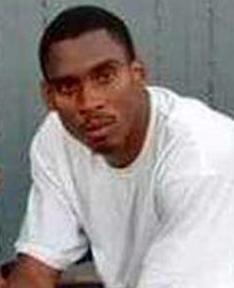
Jeremy McDole, a 28-year-old Black man, was killed during an encounter with Wilmington police on September 23, 2015, on the 1800 block of Tulip Street in Wilmington, Delaware. McDole was paraplegic and used a wheelchair, having been paralyzed in an earlier shooting. The confrontation began after a woman near an AutoZone on Lancaster Avenue called 911 and reported that a man in a wheelchair had apparently shot himself, was still moving, and still had a firearm.
The caller remained at the scene and, according to investigators, pointed McDole out to arriving officers while warning them that he still had a gun.
Senior Corporal Daniel Silva was the first of the four officers who ultimately fired their weapons to reach McDole. According to the federal investigation, Silva ordered McDole to show his hands and drop the gun, but McDole instead moved his wheelchair into the street and repeatedly reached toward his waistband. Corporal James MacColl arrived and observed the continuing confrontation. Senior Corporal Joseph Dellose then approached from another direction carrying a department-issued shotgun. Rather than first coordinating with the officers already confronting McDole, Dellose moved toward him and issued additional commands for him to show his hands. Investigators said Dellose later reported seeing what appeared to be the handle of a firearm in McDole's waistband.
Dellose fired a shotgun round at McDole. Corporal Thomas Lynch arrived at approximately the same stage of the confrontation. Despite the shotgun blast, authorities said McDole continued moving his hands near his lap and waistband. Investigators concluded that he then reached into the right side of his waistband and began bringing his hand upward. Silva, MacColl and Lynch said they believed McDole was drawing a handgun and each fired four rounds from a service pistol. McDole fell from his wheelchair after the gunfire. Responding officers immediately approached him, attempted lifesaving measures, and reported recovering a. 38-caliber revolver from the area of his waistband.
The shooting quickly became controversial, in part because a witness recorded the confrontation and because McDole's family disputed the police account that he had been armed. His relatives questioned whether the firearm recovered at the scene had actually belonged to him and raised concerns about how evidence was handled. Those allegations became a major part of the subsequent Delaware Department of Justice investigation. State investigators canvassed the neighborhood, interviewed civilian and police witnesses, reviewed dispatch records and surveillance material, examined ballistic and forensic evidence, obtained an FBI-enhanced version of the witness recording, and reviewed the medical examiner's findings.
Forensic evidence became important to the state's conclusion about whether McDole possessed the revolver. Testing later found McDole's DNA on the firearm, including evidence associated with its grip, and investigators reported gunshot residue on his right hand and clothing. Witnesses interviewed by authorities also described hearing gunfire before police arrived, and the original 911 caller repeatedly reported that McDole had a gun. Officers and emergency medical personnel described seeing the firearm after the shooting. The Delaware Department of Justice ultimately concluded that the physical and witness evidence supported the finding that McDole had possessed and fired the revolver before the fatal encounter with police.
The conduct of the four officers was nevertheless subjected to unusually extensive scrutiny. In May 2016, the Delaware Department of Justice announced that it did not find probable cause to criminally charge Silva, Lynch or MacColl. Prosecutors concluded that each officer believed, at the moment he fired, that deadly force was necessary to protect himself, another officer or nearby civilians from death or serious physical injury. Under the Delaware law applicable to police use of deadly force at the time, prosecutors determined that those circumstances prevented a viable criminal prosecution.
Dellose's actions received substantially harsher criticism. Delaware's attorney general initially believed there was enough concern about Dellose's conduct to attempt to build a felony assault case. Prosecutors focused on his decision to immediately confront McDole instead of coordinating with officers who were already at the scene and on his decision to fire the first police shot from his shotgun. The state brought in a former federal prosecutor to prepare the matter for possible prosecution and consulted two nationally recognized police use-of-force experts. Both experts concluded that, despite serious concerns about Dellose's tactics, his actions did not amount to criminal conduct under Delaware law. With prosecutors unable to counter the expert testimony that would have supported Dellose's defense, the state declined to bring charges.
The Delaware Department of Justice made clear that the absence of criminal charges did not amount to an endorsement of Dellose's conduct. Its report described his actions as extraordinarily poor police work that endangered members of the public and other officers and stated that he should not remain in a Wilmington Police Department position requiring him to carry a firearm in public. The investigation also found serious shortcomings in Wilmington police policies and training, particularly concerning use of force and interactions with people suffering from disabilities, mental illness or cognitive impairments.
Federal authorities separately reviewed whether any of the officers had violated McDole's federal civil rights. The FBI, the Justice Department's Civil Rights Division and the U.S. Attorney's Office examined police reports, witness accounts, dispatch records, forensic evidence, the autopsy and the enhanced recording of the confrontation. On January 6, 2017, the U.S. Department of Justice announced that there was insufficient evidence to establish beyond a reasonable doubt that Silva, MacColl, Lynch or Dellose had willfully used unconstitutional excessive force. The federal investigation was therefore closed without charges. No officer was arrested, prosecuted, tried or convicted in connection with McDole's death.
McDole's family pursued a civil lawsuit against Wilmington and the officers, maintaining that the shooting was unjustified and challenging aspects of the official account. In December 2016, the parties reached a $1.5 million settlement, with the city and its insurer agreeing to pay the money in exchange for dismissal of the claims. The settlement expressly stated that it was not an admission of wrongdoing by Wilmington or its police officers and was not a concession by McDole's family that its allegations lacked merit. Wilmington also acknowledged that the police department was reviewing its use-of-force policies and de-escalation training.
Questions surrounding the gun and the circumstances of the shooting continued for years. In 2020, after McDole's family and supporters renewed allegations that the firearm had been planted and pointed to purported new witnesses, the Delaware Department of Justice's Division of Civil Rights and Public Trust reopened its review of the available evidence. Investigators conducted additional interviews, subpoenaed individuals claiming to possess new information, revisited the forensic evidence, disclosed previously unreleased DNA and firearm information, and arranged for a new firearms examination. The supplemental investigation again concluded that the evidence supported the finding that McDole possessed the revolver and did not provide a basis for changing the earlier charging decisions. As a result, the case ended without any criminal arrests or charges against the four Wilmington officers who fired on McDole.