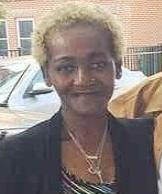
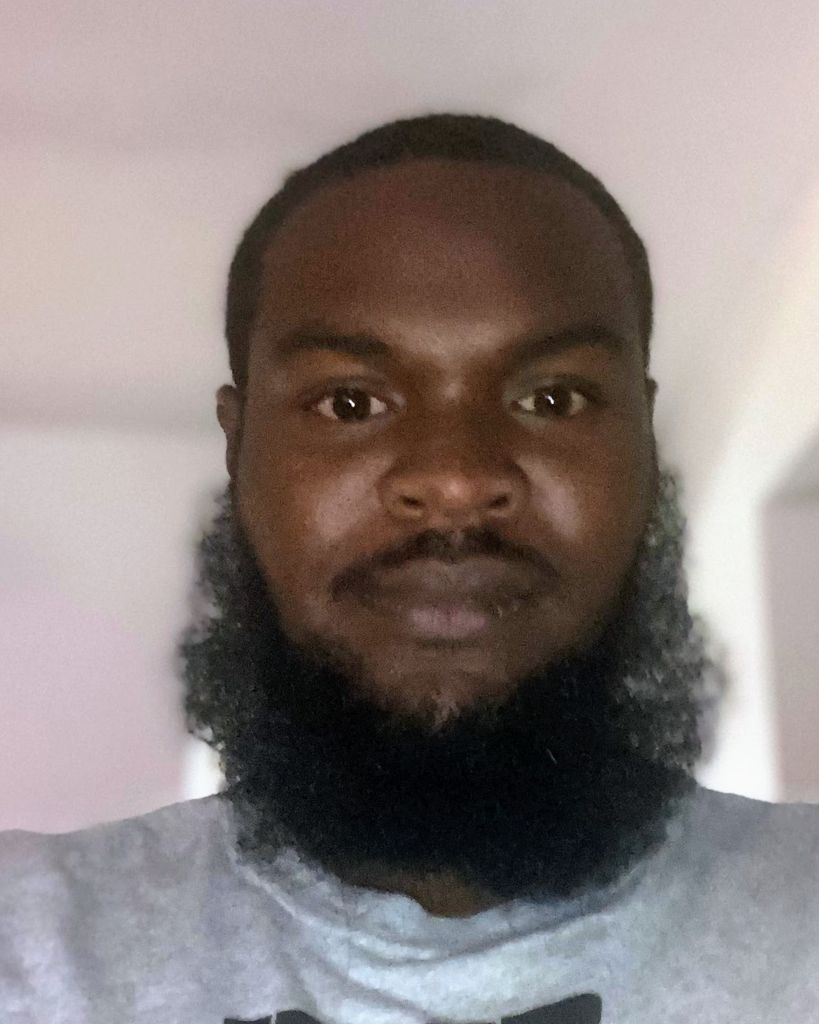
Isabel M. Cooper, a 34-year-old Black/African American woman from Wilmington, Delaware, was killed during the early morning hours of May 24, 2018. Although some initial reports listed her as 30, official police updates and records showing her July 27, 1983 birth date establish that she was 34. Cooper worked as a certified nursing assistant and was the mother of a son. She was also seven months pregnant with a daughter who was to be named Bella Rose.
At approximately 2:00 a.m., New Castle County police officers were sent to the intersection of Kiamensi Road and Rothwell Drive near Stanton after someone reported what appeared to be a single-vehicle crash. A damaged car had struck the curb, but the scene was not an ordinary traffic accident. Inside the vehicle, officers found Cooper and her boyfriend, 34-year-old Thessalonias Berry, suffering from gunshot wounds. New Castle County paramedics pronounced both victims dead, and Cooper's unborn child also died. Investigators initially did not know whether the couple had been shot where the vehicle stopped or whether the shooting had occurred somewhere else before the car crashed.
The killings left investigators with a scene that appeared to have unfolded suddenly and at close range. Later court records stated that Cooper and Berry had been shot from behind at close range while seated in the front of the vehicle. Detectives searched the surrounding area, including tall grass near the car, and began reconstructing the victims' movements and contacts before their deaths. Witness accounts, surveillance recordings from a nearby gas station, and a bloodstained shirt carrying gunshot residue eventually became significant pieces of evidence. The shirt, along with DNA evidence and other clothing found at the scene, pointed investigators toward Walter T. Lolley.
Police learned that Lolley had been one of the last people known to have contact with Cooper and Berry. Evidence also showed that Lolley and Berry were close friends who spoke frequently, spent considerable time together and had worn matching outfits on the day of the killings. Lolley later denied having a close relationship with the victims, denied living in Delaware during the relevant period and disputed his whereabouts on the night of the murders. Investigators concluded that the witness evidence, surveillance footage, DNA and clothing evidence contradicted those denials. By the time authorities identified him as the suspect, however, Lolley had left Delaware.
The U.S. Marshals Service apprehended Lolley in Georgia on September 13, 2018. He remained there until he was extradited to Delaware on December 11. Following his return, police arrested him for the deaths of Cooper and Berry. He was initially charged with two counts of first-degree murder, two firearm-possession counts connected to the commission of a felony and a firearm-possession charge based on his status as a prohibited person. He was arraigned and held at the Howard R. Young Correctional Institution on $2,125,000 cash bail. A grand jury subsequently indicted him in April 2019 on two counts each of first-degree murder, possession of a firearm during the commission of a felony and possession of a firearm by a prohibited person.
As Lolley's trial approached, the case ended through a negotiated plea rather than a jury verdict. On February 25, 2020, he entered a Robinson plea to two reduced counts of second-degree murder. Under Delaware law, that type of plea allowed the court to convict him without requiring him to expressly admit that he committed the killings. Prosecutors agreed not to seek habitual-offender sentencing and limited their sentencing recommendation to 30 years of incarceration, although the plea documents permitted the court to impose a longer term. Lolley later attempted to withdraw the plea, claiming that his attorney had not provided discovery, had failed to pursue a suppression motion and had misled or pressured him regarding the agreement. The Superior Court rejected those arguments, finding that he had entered the plea knowingly, intelligently and voluntarily and that substantial evidence supported his guilt.
On July 23, 2021, the court sentenced Lolley to a total of 50 years at Level V incarceration, followed by lower levels of supervision and probation. He later sought postconviction relief while continuing to maintain his innocence and accusing his former attorney of ineffective assistance. In September 2024, the Superior Court denied that request, concluding that his claims lacked merit. Lolley appealed, but on June 17, 2025, the Delaware Supreme Court affirmed the lower court's decision, leaving his two second-degree murder convictions and sentence in place.