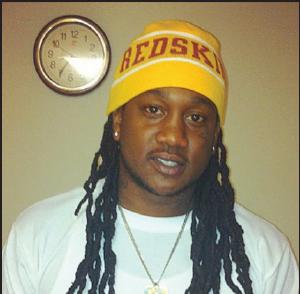
Do you know who murdered Willie Best?
On a cold Saturday evening in early January 2005, Willie Best, an African-American man living with his family in the Barry Farms housing project in Southeast Washington, D.C., made his way through the hallway of 1249 Eaton Road SE. Just months earlier, he and his mother had been uprooted from their old neighborhood after surviving a violent robbery, their lives reshaped by the decision to cooperate with law enforcement. The move to Barry Farms was supposed to be a step toward safety and stability after weeks in temporary hotel placements arranged by federal authorities, but the tension of being a known witness lingered in the background of their new routines.
The story of how Best arrived at that hallway begins in September 2004, when he and his mother were victims of an armed robbery in the Lincoln Heights area of Northeast Washington. According to later court records, both of them agreed to testify in the prosecution of two men accused of carrying out the robbery, stepping into the fraught role of key witnesses in a violent-crime case. Because of the perceived danger that followed, the U.S. Attorney's Office placed the family in the Emergency Witness Assistance Program, first moving them to hotels in Northern Virginia and Silver Spring, Maryland, while longer-term arrangements were made. Eventually, a unit in the Barry Farms public housing complex was offered through a HUD-related witness relocation program. Best's mother initially resisted the idea of moving into Barry Farms, worried about the environment, but after discussions with a witness security specialist she agreed, and in December 2004 the family settled into their new apartment there.
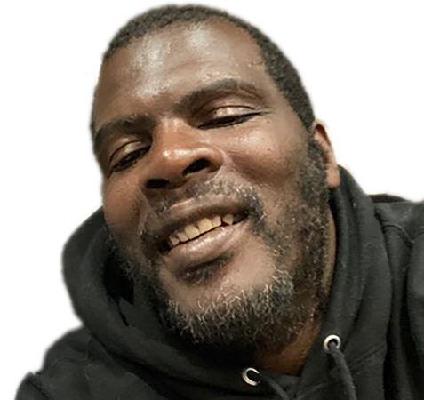
Roughly a month later, on the evening of Saturday, January 8, 2005, violence came to Barry Farms. Around 6:13 p.m., gunfire erupted inside 1249 Eaton Road SE. Best was shot in the hallway of the building where he and his family were living, the same place that had been presented as a refuge after the upheaval of relocation. Responding officers from the Metropolitan Police Department arrived to find him mortally wounded; official notices describe him simply and starkly as having been “shot to death” there. His death, recorded in police bulletins and later memorialized in an obituary under the name Willie R. Best III, left behind a grieving wife, Dionne R. Best, four children, and an extended family that included his mother, siblings, and stepfather.
In the days that followed, detectives from the MPD's Violent Crimes Branch opened a homicide investigation, and a reward of up to $25,000 was announced for information leading to the arrest and conviction of whoever was responsible. Public appeals emphasized how crucial even small details could be, asking anyone who had seen or heard anything unusual that evening in the hallway or around Eaton Road to come forward. Yet as the weeks turned into years, no one was publicly named as a suspect in Best's killing. While two men had already been arrested and prosecuted in connection with the earlier armed robbery that had made Best a protected witness, the record does not show any corresponding arrests or charges for his murder. Police and public case summaries describe the homicide as unsolved, and community case-tracking sites still list it as an open investigation, underscoring that no suspect has been identified or brought to justice for the shooting itself.
Best's family pursued another path in search of accountability, filing a wrongful-death lawsuit against the United States that argued federal officials had created the danger by moving the family into Barry Farms despite the risks they faced as witnesses. In that case, his mother, acting as executrix of his estate, described the sequence of the robbery, the witness programs, the relocations, and the final move into the Southeast D.C. housing project, framing his death as the foreseeable result of decisions made by government agencies. A federal judge ultimately dismissed the suit, ruling that the choices made by officials fell under the “discretionary function” exception of the Federal Tort Claims Act and that the government could not be held liable. What remained, after the legal arguments ended and the court's opinion was filed away, was the unresolved killing itself: a man gunned down in a hallway, a family left to mourn, and a case that, even nearly two decades later, still waits for someone to name the shooter and explain what happened on that January evening in Barry Farms.