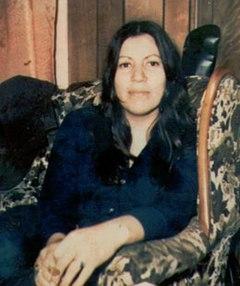
In the winter of 1975, a 30-year-old Native American woman, Anna Mae Pictou Aquash, a Mi'kmaq from Nova Scotia, Canada, met a tragic end on the Pine Ridge Indian Reservation in South Dakota. Her frozen body was discovered by a rancher on February 24, 1976, in a remote ravine. An initial autopsy, conducted by the Bureau of Indian Affairs, concluded that she had died of exposure. In a highly unusual and controversial move, her hands were severed and sent to the FBI for fingerprint identification. This first examination failed to find a bullet wound at the base of her skull.
Following demands from her family and the American Indian Movement with which she was an active member, her body was exhumed for a second autopsy. This examination revealed a. 32 caliber bullet wound at the back of her head, determining her death to be a homicide, an execution-style murder. At the time of her death, Aquash was a prominent figure in AIM, having participated in the 1972 occupation of the Bureau of Indian Affairs headquarters in Washington, D.C., and the 1973 Wounded Knee standoff. Rumors and suspicion surrounded her death, with some AIM members alleging she was an FBI informant, a claim prosecutors and government witnesses later denied.
For decades, the case remained cold, fueling speculation and mistrust between AIM and law enforcement. The investigation was hampered by a lack of cooperation from potential witnesses. However, a breakthrough occurred in the early 2000s when a federal grand jury was convened, leading to the indictment of two men, Arlo Looking Cloud and John Graham, for her murder in March 2003. Looking Cloud, a homeless man from Denver, was arrested shortly after the indictment.
Arlo Looking Cloud was convicted of murder in 2004 and sentenced to life in prison. John Graham, a member of the Champagne and Aishihik First Nations in the Yukon, was extradited from Canada in 2007 to face charges. In 2010, Graham was found guilty of felony murder. Another woman, Thelma Rios, was charged in connection with the kidnapping and murder, eventually pleading guilty to being an accessory to kidnapping. A fourth individual, Richard Marshall, was charged with aiding the murder but was ultimately acquitted. The motive for Aquash's murder, as presented during the trials, was the belief by some within AIM that she was a government informant.