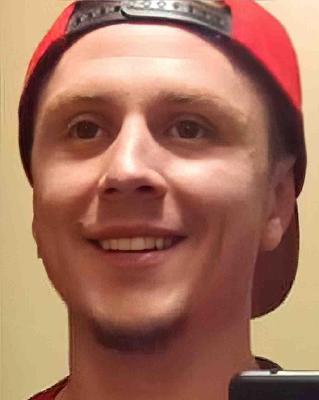
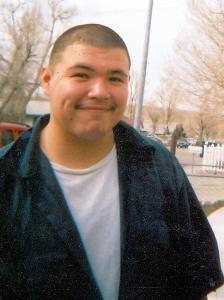
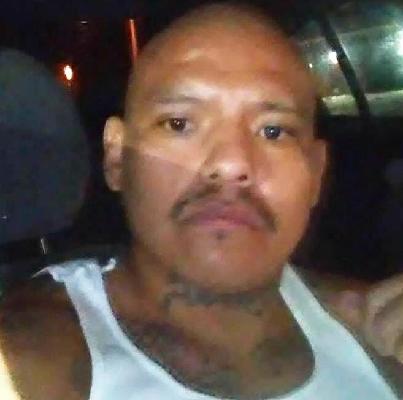
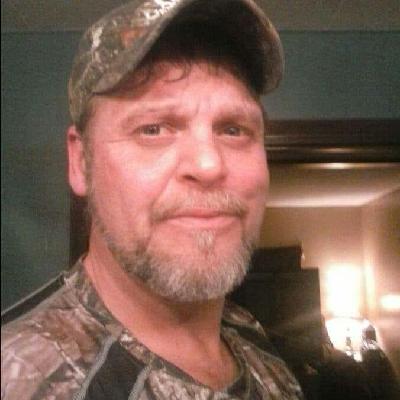
On November 12, 2021, in a modest home on the 4700 block of East 12th Street in Casper, Wyoming, William Michael Johnson, a 70-year-old male, was found dead from a gunshot wound, his death soon ruled a homicide by the Natrona County Coroner after an autopsy. Johnson had only recently settled in Casper; according to court documents and later news reports, he and his wife had moved there from Mead, Colorado, in 2020, and their adult child, now known as Vincent Daniel Hayes, moved in with them in
October 2021. The family's new start in Wyoming would be abruptly shattered less than two months after Hayes arrived.
The chain of events that led to Johnson's death began on the night of November 11, 2021, when father and son fell into a bitter argument inside the family home. Hayes, then in his late thirties, and Johnson had a history marked by complicated family dynamics and Hayes's struggles with mental health; Johnson's wife later told investigators that years earlier their child Elizabeth had transitioned and was living as their son, Vincent, and had been diagnosed with what she described as multiple personality disorder. One of those personalities, called “Reno,” figured prominently in the story Hayes would later tell police. As tempers rose that November evening, the argument turned from words to weapons. Hayes went to the basement, quietly loaded a handgun, and armed himself, while Johnson retrieved his own firearm upstairs, both men now holding guns in the same house.
Witness accounts and court records describe a tense, surreal standoff between father and son. At some point during the confrontation, Johnson sat back in a recliner in the living room while the dispute continued. Hayes would later tell officers that he believed his father was about to shoot him and that he heard Johnson make a chilling remark about it being better if he “just killed” the personality known as Reno. Moments later, still armed and standing near his seated father, Hayes fired multiple rounds. The bullets struck Johnson in the head and body, killing him in front of his wife, who heard the shot but did not see the shooting itself. In the immediate aftermath, instead of calling for help, Hayes tried to erase what had just happened—cleaning blood, hiding his handgun, ammunition, and bloodstained gloves in the basement, and urging his mother not to contact the authorities.
It was not until the next morning that police were summoned to the home. When officers arrived on November 12, they found Johnson dead inside, the scene suggesting a violent end rather than a natural passing. Initially, Hayes and his mother offered a carefully constructed lie: an unknown intruder, they claimed, had entered the house and shot Johnson before fleeing into the night. Investigators quickly began to probe that story, and as the facts accumulated, the version of events involving a mysterious assailant began to unravel. Under questioning, Hayes eventually admitted that the tale of an intruder was fabricated, saying he invented it because he feared no one would believe that he had fired in self-defense.
Within days, the focus of the investigation had shifted squarely onto Hayes. Casper police arrested him and booked him on a charge of second-degree murder, describing the killing as an isolated incident involving family members rather than a random attack. A Natrona County circuit court judge set his bond at $100,000 cash only, and the coroner's public statement identified Johnson by name and confirmed that his death was officially classified as a homicide. Not long after, broader gun-violence tracking organizations and obituary notices began to record Johnson's death: one national memorial site listed him as having been “lost to gun violence” in Casper on November 12, 2021, while a cremation service obituary quietly marked his dates of birth and death and invited family and friends to share memories.
Even as the criminal case moved forward, questions emerged about Hayes's mental state and his ability to stand trial. Prosecutors charged him with second-degree murder, and he was sent for a court-ordered mental health evaluation, at one point being found incompetent and committed to the Wyoming State Hospital so doctors could work to restore his competency. In November 2022, clinicians reported that Hayes was now competent, and in early 2023 he appeared in Natrona County District Court, entering pleas of not guilty and later, for a time, not guilty by reason of mental illness or deficiency. Ultimately, he withdrew the mental-illness plea, setting the stage for a full trial before a jury.
In August 2023, nearly two years after Johnson's death, a twelve-person jury in Casper heard the evidence. Over a two-and-a-half-day trial, they listened as prosecutors outlined how an argument in a family home escalated into a deadly shooting, and how Hayes had tried to clean the scene and mislead investigators with a false story about an intruder. The defense argued that Hayes had acted in self-defense or, at worst, in the heat of passion consistent with voluntary manslaughter, pointing to his fear of his father and his belief that a gun was about to be used against him. The judge instructed jurors on self-defense and on Wyoming law allowing them to infer malice from the use of a deadly weapon, while emphasizing that the state still had to prove every element beyond a reasonable doubt. After nearly three hours of deliberation, the jury rejected Hayes's claims and found him guilty of second-degree murder, and his bond was revoked as he was taken back into custody to await sentencing.
When the case returned to court for sentencing, the stakes were measured in decades. Second-degree murder in Wyoming carries a potential penalty of 20 years to life, and the district judge imposed one of the harsher ranges available: Hayes received a prison sentence of 50 to 75 years, with credit for the time he had already spent in jail since his arrest. He appealed, arguing that the jury instruction about inferring malice from his use of a gun was improper, particularly in light of his self-defense theory. In December 2024, the Wyoming Supreme Court issued its opinion in Hayes v. State, carefully reviewing the trial record and the challenged instruction. The justices concluded that the instruction was a permissible “may infer” charge, consistent with state precedent and constitutional requirements, and that the jury had been properly told the state still had to prove malice and every other element beyond a reasonable doubt. They affirmed his conviction and sentence, closing the appellate chapter of the case.
Today, William Michael Johnson's name appears in two starkly different registers: in the quiet lines of an obituary noting only that he passed away on November 12, 2021, in Casper, and in public databases that mark him as one of thousands of Americans killed by gunfire. Behind those brief entries lies the fuller story that emerged in court—of a retiree in a new town, a family grappling with identity and mental illness, an argument that spiraled into a fatal clash of firearms, and a son who killed his father, was arrested, tried, convicted of second-degree murder, and sentenced to spend much of the rest of his life in prison for the crime.