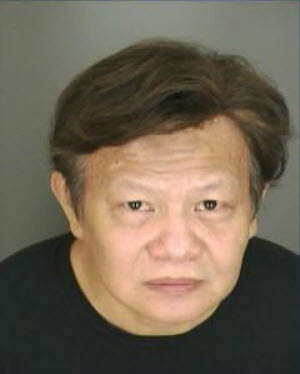
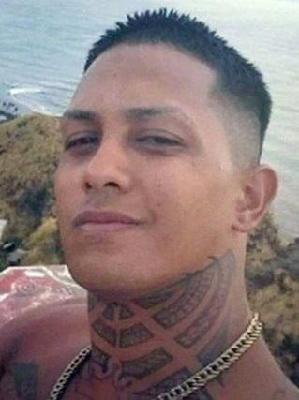
Amby Cruz, an 88-year-old Filipino man from Omao on Kauai, died on January 1, 2014, after what should have been an ordinary holiday gathering turned into a killing that stunned his family and neighbors. Public reports described him as a retired Lihue Plantation mechanic who had deep roots in the community, a man who had lived a long life and was remembered by his children, grandchildren, and great-grandchildren.
In the first days after his death, authorities said he had suffered a fatal gunshot wound to the head, and the case quickly shifted from a sudden death investigation into a homicide.
The shooting was tied to a New Year's party that stretched across the last hours of December 31, 2013, and into the early morning of January 1. As the island was still waking up to a new year, police were already working to piece together what had happened inside Cruz's home. The details that emerged painted a grim contrast: while family and community members were preparing to mourn and bury an elder, investigators were moving at high speed because the suspected killer had already left Hawaii.
Authorities identified a suspect as Giovanni Lictawa Corpuz, a 41-year-old Filipino-American man. Reports said he was accused in Cruz's killing and that law enforcement believed he was fleeing the United States. That suspicion led to an international effort. Within days, Corpuz was tracked to Taiwan, where he was intercepted at Taoyuan International Airport while reportedly in transit to Manila. The arrest drew attention because it was described in overseas reporting as a coordinated operation involving U.S. authorities and Taiwanese investigators. According to those reports, he refused to answer questions about the homicide after being taken into custody and said his travel was unrelated to the case.
Back in Hawaii, the criminal case moved forward quickly. Public reporting from the time showed that Corpuz was charged in connection with Cruz's death, and accounts of later court proceedings said he pleaded not guilty to second-degree murder. The case, at least in its early stages, was not treated as a mystery with unknown suspects; it became a prosecution centered on one named defendant, one arrest, and one allegation that the fatal shooting happened during that New Year's Eve gathering.
The human side of the story remained heavy beneath the court language. Cruz's obituary and death notices showed a family preparing funeral services even as the homicide case unfolded in headlines. He was remembered not only as a victim in a criminal file, but as a father, grandfather, widower of a long life, and a worker whose life had been built in ordinary, familiar routines on Kauai. That is part of what made the case feel so jarring: the victim was an elderly man at home, and the violence that ended his life came at the edge of a holiday meant for celebration.
As for later developments beyond the arrest and the murder charge, publicly accessible reporting is much thinner. The arrest of Giovanni Lictawa Corpuz and the filing of the murder case were clearly reported, but widely available online sources do not appear to provide a clear, well-documented public trail of a final trial verdict or conviction in the same way they do for the initial arrest and arraignment. Based on the accessible reporting, the key known developments are that Amby Cruz was killed by gunfire on New Year's Day 2014, Giovanni Lictawa Corpuz was identified as the suspect, he was arrested in Taiwan while apparently trying to continue on to the Philippines, and he was later brought into court in Hawaii to face a second-degree murder charge.