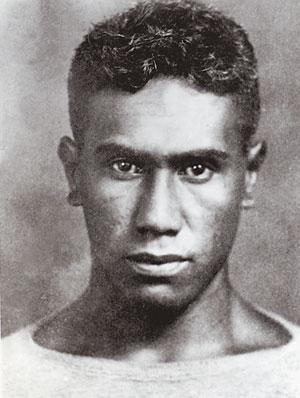
Kaulike “KK” Kalama, a 34-year-old Native Hawaiian man from Honolulu, was on duty the morning of January 19, 2020, when a routine call for help in the Diamond Head area turned into a slow-moving nightmare. Police were dispatched to a home on Hibiscus Drive after reports that an elderly woman had been stabbed during a landlord-tenant dispute. As officers moved down the driveway toward the residence, the man inside allegedly opened fire.
In the first burst of chaos, Officer Tiffany-Victoria Enriquez was shot and killed; moments later, as additional officers arrived to help, Kalama was also struck and fatally wounded, falling in the same neighborhood he'd been assigned to protect.
Investigators and officials identified the suspected gunman as Jaroslav “Jerry” Hanel, a 69-year-old tenant who, according to police accounts reported afterward, had been facing eviction and had a recent history of repeatedly calling 911. In the version laid out by authorities at the time, the violence began with Hanel allegedly stabbing his landlady during an argument and then turning his weapon on responding officers. The scene refused to stay contained: a fire ignited at the suspect's residence and spread through the neighborhood, destroying multiple homes and leaving the area smoldering under an armed, tactical police response as officers tried to secure the perimeter, rescue anyone who could be reached, and prevent the flames from racing farther.
For days, the case unfolded in a grim in-between—part homicide investigation, part disaster recovery. With the suspected shooter unaccounted for, investigators sifted through charred debris and unstable rubble, searching for evidence and for missing people, while officials warned that processing the scene and recovering remains could take significant time. The question of whether the suspect had escaped lingered over the community until forensic work began to give a definitive answer.
On February 5, 2020, the Honolulu Medical Examiner's Office identified recovered remains as those of Hanel, effectively ending the search for a living suspect and closing off any possibility of an arrest, trial, or conviction in the shootings that killed Kalama and Enriquez. With the alleged perpetrator confirmed dead, investigators treated the matter as an active but finite case file—focused on documenting what happened, how the attack unfolded, and what failures of warning, communication, or process might have preceded it. Kalama's death left a family and a department grieving, while the neighborhood—scarred by both gunfire and fire—was left to rebuild amid the weight of a day that began as a call for help and ended in tragedy.