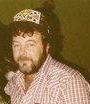
In the spring of 1963, a 35-year-old white postal worker named William Lewis Moore embarked on a solitary journey for civil rights, a mission that would tragically be his last. A former Marine and a member of the Congress of Racial Equality Moore was a passionate advocate against racial segregation. He began a one-man march from Chattanooga, Tennessee, with the ultimate destination of Jackson, Mississippi.
There, he intended to personally deliver a letter to Governor Ross Barnett, urging him to support integration. To convey his message to all who saw him, Moore wore sandwich-board signs that read, “End Segregation in America, Eat at Joe's-Both Black and White” and “Equal Rights For All. ”
On April 23, 1963, roughly 70 miles into his trek, Moore was walking along U.S. Highway 11 near Attalla, Alabama. A local radio reporter, having received a tip, found and interviewed him. Concerned for his safety, the reporter offered Moore a ride to a hotel, but the determined activist chose to continue his walk. Less than an hour later, a passing motorist discovered William Moore's body on the side of the road; he had been shot twice in the head at close range with a. 22-caliber rifle.
The investigation into the murder quickly focused on a local white man named Floyd Simpson, who reportedly had links to the Ku Klux Klan. Moore had an encounter with Simpson earlier on the day of his death. Ballistic testing reportedly matched the bullets from the crime scene to a rifle owned by Simpson, leading to his arrest. Despite this evidence, a grand jury declined to indict him, and no one was ever convicted for the murder of William Lewis Moore. The case was reviewed by the FBI in 2010, but with Simpson having died in 1998, the investigation was officially closed in 2012. In the aftermath of his death, activists from CORE and the Student Nonviolent Coordinating Committee attempted to complete Moore's march but were met with violence and arrested by Alabama state troopers.