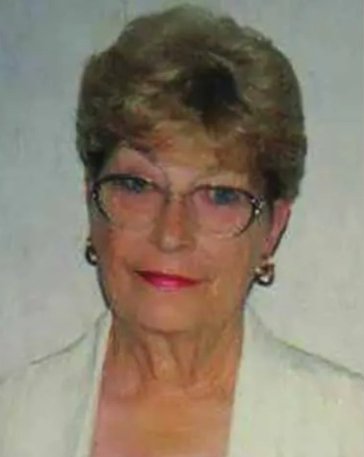
Tanisha Norton was a 36-year-old Black/African American woman living in Dothan, Alabama, when she was found dead inside her home on Aberdeen Drive on the morning of March 3, 2016. Neighbors told local reporters that Norton’s daughter discovered her inside the residence at approximately 6:30 a.m. and called 911. Emergency personnel responded to what was initially reported as a medical emergency, but Norton had suffered a gunshot wound and was already dead when first responders arrived.
Police initially described the matter publicly as a suspicious-death investigation while detectives began examining the circumstances surrounding the shooting.
Attention quickly focused on James Morris Johnson Jr., a man investigators described as Norton’s longtime companion. Police said Norton and Johnson had been in a domestic relationship, while relatives told reporters that the couple had experienced domestic problems. A relative of Johnson said the two had been together for approximately six years. As investigators searched for Johnson, authorities issued an all-points bulletin and followed multiple leads in and around Dothan, but those early attempts did not result in his capture.
Johnson remained sought for several days as the investigation developed into a murder case. On March 11, 2016, law-enforcement officers and members of a regional fugitive task force located him at a residence in Clayton, Alabama, in Barbour County. Officers were establishing a perimeter around the property when Johnson came outside and surrendered peacefully. He was returned to Dothan, where authorities charged him with murder in connection with Norton’s shooting death.
The prosecution moved forward later that year. In September 2016, a Houston County grand jury indicted Johnson for Norton’s murder, finding sufficient evidence for the charge to proceed toward trial. Contemporary reporting described his arrest as the culmination of a multi-day manhunt that had begun shortly after Norton was found dead.
The case, however, contained a significant forensic complication. Later reporting revealed that the medical examiner initially classified Norton’s death as a suicide. That determination was subsequently changed to undetermined rather than homicide. The uncertainty surrounding the official manner-of-death finding became an important issue in the criminal case because prosecutors were attempting to prove beyond a reasonable doubt that Norton had been intentionally killed by Johnson.
Johnson maintained that he had not murdered Norton. While jailed in 2016, he filed a federal civil-rights action accusing officials involved in the prosecution of framing him, fabricating the basis for his arrest and suppressing favorable evidence. Those allegations represented Johnson’s claims rather than established findings; the federal court proceeding confirms that he was being detained and prosecuted for Norton’s death at that time.
The murder prosecution ultimately did not result in a conviction. WTVY later reported that a jury acquitted James Johnson Jr. of the charge stemming from Norton’s death. Norton’s father, Michael Brown, subsequently criticized the handling of the prosecution and said he believed the case should have been developed further before being taken to trial. The district attorney maintained that the evidence presented was sufficient to prove guilt, but the jury did not convict Johnson. The same later report specifically identified the shifting medical examiner finding—from suicide to undetermined—as one of the difficulties surrounding the case.
As a result, although Johnson was identified as the principal suspect, arrested, formally charged with murder and indicted by a grand jury, he was ultimately acquitted. The publicly available reporting reviewed does not identify another person who was subsequently arrested or convicted in connection with Norton’s death. The case therefore ended without a murder conviction despite the extensive investigation and prosecution that followed her fatal shooting.