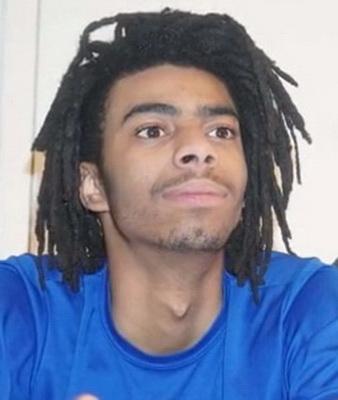
Do you know what happened to Rosalio Gutierrez? Rosalio Gutierrez Jr., a 40-year-old Hispanic/Latino man, was last seen in Kenosha, Wisconsin, on May 17, 2020. What began as a missing-person investigation quickly took on the characteristics of a homicide case. Gutierrez failed to report to work the following day and remained absent afterward. On May 19, his girlfriend went to his apartment in the 3700 block of 15th Street after being unable to reach him.
She found the patio door open and noticed that furniture appeared to have been moved, an area rug was missing, and there was blood on the floor and furniture. Both of Gutierrez's vehicles were still parked at the apartment complex. Police processing the residence found a large quantity of blood and evidence suggesting a violent struggle had occurred. Gutierrez was nowhere to be found.
Investigators soon focused on Zachariah Anderson, the former boyfriend of the woman Gutierrez had been dating and the father of her children. She told authorities that Anderson had been intensely jealous of her relationship with Gutierrez and had been monitoring her movements. According to investigators, Anderson used tracking devices and other methods to follow her and learn where she was going, including when she visited Gutierrez. Weeks before the disappearance, Gutierrez discovered items missing from his vehicle, including his vehicle registration, and investigators developed evidence connecting some of those missing materials to Anderson. Anderson was initially arrested and charged with stalking in May 2020 as detectives continued investigating what had happened inside Gutierrez's apartment.
The physical evidence strengthened the prosecution's belief that Gutierrez had been killed. Investigators searched Anderson's Dodge minivan and discovered that the rear seats had been removed and part of the carpeting had been cut away. Witnesses and forensic personnel described a bleach odor and indications that portions of the vehicle had been cleaned. Despite the apparent cleaning, a tiny bloodstain recovered near the rear of the van was subjected to DNA testing and matched Gutierrez. Prosecutors argued that the blood was powerful evidence that Gutierrez's body, or Gutierrez while severely injured, had been inside Anderson's vehicle after the violence at the apartment.
Detectives also followed evidence north of Kenosha into Ozaukee County. A burn area at Anderson's property was examined, along with another burn location associated with his family. A cadaver dog alerted in the area, and investigators reported finding remnants of clothing consistent with clothing Gutierrez had been wearing. A charred bleach container was also recovered. Surveillance evidence showed Anderson at a Walmart on May 18, the day after Gutierrez disappeared, purchasing items that included garbage bags, latex gloves and bleach. Prosecutors eventually alleged that Anderson killed Gutierrez in the Kenosha apartment on May 17, removed his body, transported it away from the scene and attempted to destroy the remains by burning them. Gutierrez's remains have never been recovered.
In December 2020, after months of investigation, prosecutors charged Anderson with first-degree intentional homicide and hiding a corpse in addition to the stalking charges already connected to the case. The state's theory was that jealousy provided the motive: Anderson had become increasingly obsessed with his former girlfriend's relationship with Gutierrez, tracked their activities and ultimately confronted Gutierrez. The prosecution had no recovered body, murder weapon or eyewitness to the killing, so much of the case depended on circumstantial evidence, including the enormous amount of blood in the apartment, Gutierrez's DNA in Anderson's vehicle, evidence of cleaning and missing carpeting, the stalking activity, digital and surveillance evidence, and the burn sites. Anderson denied killing Gutierrez and maintained his innocence.
Anderson's first homicide trial began in March 2022 but ended in a mistrial before the case could be decided. He was tried again beginning in February 2023. During the lengthy retrial, prosecutors presented forensic testimony concerning the blood evidence and described the pattern of stalking that preceded Gutierrez's disappearance. The defense attacked the investigation, emphasized that police had never recovered Gutierrez's remains or a murder weapon, and argued that the prosecution had not proven Anderson was at the apartment when the killing occurred. Jurors also heard testimony from a former jail cellmate who claimed Anderson had admitted killing Gutierrez, although Anderson's attorneys challenged the witness's credibility and pointed out that he could benefit from cooperating with prosecutors.
After a trial lasting approximately three and a half weeks, the jury deliberated for about 10 hours. On March 22, 2023, Anderson was found guilty on all four felony counts: first-degree intentional homicide, hiding a corpse and two counts of stalking. The verdict meant jurors concluded beyond a reasonable doubt that Gutierrez had been murdered even though his body had never been located.
On May 16, 2023, Judge Bruce Schroeder sentenced Anderson to life in prison for the intentional homicide. He also imposed prison sentences for hiding Gutierrez's corpse and for the two stalking convictions, with the sentences ordered to run consecutively. Anderson received two years in prison followed by two years of extended supervision on each stalking count and six years in prison followed by five years of supervision for hiding the corpse. The judge ruled that Anderson could become eligible for release on the life sentence only after serving 40 years following the other consecutive prison terms, effectively leaving him facing decades behind bars before any possibility of release. Anderson continued to insist that he was innocent at sentencing.
Although the homicide prosecution resulted in a conviction and life sentence, one part of the case remains unresolved for Gutierrez's family: the location of his remains. Wisconsin authorities continue to list him in the state's missing-person clearinghouse because his body has never been found. The state record notes the homicide conviction and life sentence while continuing to seek information that could reveal where Gutierrez was taken after his killing, leaving his family without the opportunity to recover and lay his remains to rest.