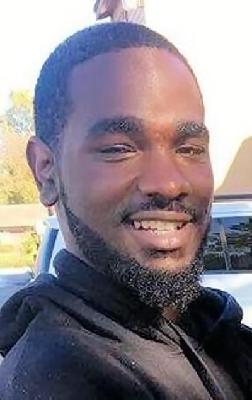
Do you know who murdered Robert? Robert Quincy Davis, a male resident of Tulsa, Oklahoma, spent the early morning of June 27, 1990, in the company of a small group gathered on the playground of an apartment complex along North Trenton Avenue in the Seminole Hills area of north Tulsa. It was around 1:50 a.m., the kind of late hour when conversations grow quieter and the neighborhood settles into darkness, when the group lingered outside, talking and passing time near the swings and open courtyard of the complex.
As they stood together on the playground, a blue station wagon began circling the complex. The vehicle made several slow passes around the buildings, enough that people in the group noticed it and grew uneasy. The car did not simply appear and disappear; it moved through the area repeatedly, as if its occupants were watching the gathering on the playground and waiting for a moment to act.
Eventually, the station wagon pulled up near the playground and came to a stop. Multiple people, described in official and advocacy accounts as five males, climbed out of the vehicle. They did not speak to the group or issue any warning. Almost immediately, they opened fire into the crowd of people gathered near the playground equipment. In the chaos that followed, bullets tore through the night air as everyone tried to scatter, diving for cover or attempting to run as the gunmen sprayed the area with gunfire.
Several people were hit. Robert was struck by the gunfire and gravely wounded, while others in the group were also shot and injured amid the confusion and panic. Neighbors and witnesses would have seen the aftermath in the dim early-morning light: the abandoned playground, the fleeing vehicle, and the injured on the ground as emergency responders were called to the scene. Despite efforts to save him, Robert died as a result of his injuries, and his death was officially classified as a homicide.
In the hours and days that followed, Tulsa police opened a homicide investigation, building the case around the fragments available: the early-morning hour, the Seminole Hills Apartment Complex, the blue station wagon that had circled the complex, and the five unidentified males who stepped out and fired into the crowd before escaping back into the night. Public descriptions of the assailants have never gone beyond that basic outline. The men from the station wagon were treated as multiple suspects from the start, but their identities, motives, and connections to anyone in the crowd have never been publicly established.
Over time, the case slipped from the daily news cycle into the realm of long-term unsolved homicides. Tulsa Police Department records list the killing of Robert Quincy Davis as a cold case, emphasizing that he was shot while visiting with acquaintances on the playground when the occupants of the blue station wagon opened fire. Nonprofit organizations dedicated to unsolved homicides in Oklahoma likewise preserve his story, repeating the same core details and urging anyone with information to come forward. Across these official and advocacy accounts, there is no indication that anyone has ever been arrested or charged in connection with the shooting, and the group of gunmen remains publicly unnamed and unidentified. Decades after that night in June 1990, the murder of Robert Quincy Davis is still officially unsolved, the blue station wagon and its five occupants lingering only as a stark, unanswered detail in the record.