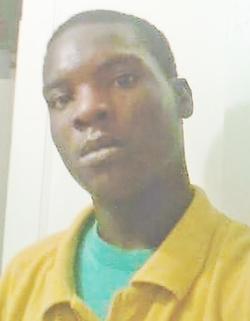
Russell C. Hoegger, a 49-year-old white male from Oklahoma City, Oklahoma, appears in publicly available records mainly as a set of vital statistics preserved in online memorial and genealogy sites rather than as the subject of any detailed news coverage. Born on February 1, 1960, and recorded as having died on September 27, 2009, in Oklahoma City, his life in the digital record is summarized by those dates and his age at death, with little else about his story captured for strangers to find.
Within genealogy compilations of the Hoegger family name, his entry sits alongside those of other relatives linked to Oklahoma City and to branches of the family spread across different states, suggesting a family with roots that reach back through several generations. These listings emphasize continuity: names, birth and death dates, and locations that map out a family history in which Russell is one more node, remembered in the same quiet, factual way as parents, grandparents, and other kin. In that context, his presence feels less like an isolated record and more like part of a larger family narrative, carried forward by descendants and distant relatives who preserve these details so that the dates will not be forgotten.
What is striking in the online trail he leaves behind is what is not there. The memorial and vital-records style entries that mention him offer no description of how he died, no indication that his passing was connected to a crime, and no hint of a public controversy or widely reported tragedy. They do not describe an accident, an illness, or violence; they simply mark that, on a specific day in late September 2009, his life ended in the city where he was recorded as living.
Equally absent from the accessible online record are the kinds of documents that usually appear when a death is investigated as a homicide: there are no easily found police bulletins naming him as a victim of crime, no news stories outlining a suspect’s description, no court records or press releases that tie his name to any arrest. Publicly visible sources treat his death as a matter of private loss and civil record rather than as a criminal case with leads, persons of interest, or charges filed. In the absence of such material, there is no reliable basis to identify any suspect or suspects, and no evidence that anyone was ever arrested in connection with his death.
As a result, the story that can be told from online sources is less the tale of a known crime than a portrait of how an ordinary life can recede into the background of public memory. Russell emerges as someone rooted in Oklahoma City, linked to a broader family web, whose passing was significant enough for loved ones to ensure that his dates and place are preserved, yet not accompanied by the kind of public documentation that would reveal how or why he died. The silence around the circumstances of his death, and around any investigation that may or may not have occurred, becomes part of that story: a reminder that for many people, even in the digital age, the intimate details of both life and death remain largely in the hands and memories of family, not in the archives of newsrooms or court records.