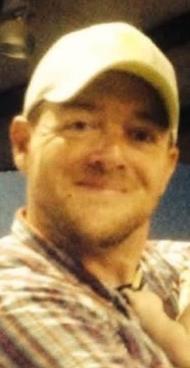
David Miquae Weideman was a 28-year-old man living in Oklahoma City who had worked hard to rebuild his life. Friends later described how he loved playing guitar and going to the lake, and how he had once climbed out of homelessness as a teenager, even becoming the subject of a local news story after he was caught breaking into a school simply to find food and a place to sleep.
By late summer 2016, he was sharing a modest house on Northwest 32nd Street, trying to enjoy ordinary pleasures with friends in a quiet neighborhood.
On August 28, 2016, what began as a casual day out turned into the final chapter of his life. Earlier that day, Weideman and a friend spent time at Lake Hefner, where they met two young women, later identified as 17-year-old Kayla Stallworth and 26-year-old Tempestt Lashay Williams. The group hit it off well enough that the women were invited back to Weideman’s home that evening. At some point, the two women left, only for Williams to return alone a short time later and visit briefly inside. According to court documents and later reporting, she then said she needed to go get her sister and walked back out toward the front porch with Weideman following her.
What happened next unfolded in just minutes. As Weideman stood on the porch, another young woman—believed to be Stallworth—approached along with two men, 28-year-old Michael Tyrone Webb Jr. and 36-year-old Samuel Dale Holmes. Witnesses later told police that Webb and Weideman exchanged words, an argument flaring in the dark outside the house. In that tense moment, Webb allegedly drew a gun and shot Weideman in the chest at close range. He then stepped inside and fired again, striking another person in the ankle, before grabbing Weideman’s wallet and fleeing with the others into the night. Neighbors and friends found Weideman bleeding on his front porch shortly after 1:30 a.m.; he was rushed to the hospital but was pronounced dead there, his killing later counted as Oklahoma City’s 53rd homicide of 2016.
In the days that followed, the investigation quickly focused on Webb and Williams. Oklahoma City police obtained arrest warrants charging both with first-degree murder and robbery, based on witness accounts and the events described in the arrest affidavit. Facing intense scrutiny, Webb ultimately surrendered: urged by his uncle, he met police in the parking lot of a local television station after seeing his name on the news, and officers took him into custody there. Williams turned herself in to authorities the next day. Formal charges soon followed; prosecutors filed counts of first-degree murder, first-degree robbery, and assault with a dangerous weapon against both Webb and Williams, and they were ordered held without bond in the Oklahoma County jail while the case moved forward.
The circle of alleged participants widened as detectives continued to piece together the night’s movements. On October 6, 2016, police arrested Stallworth on a complaint of first-degree murder in connection with the shooting, tying her to the set-up that brought the armed men to Weideman’s door. A few days later, on October 11, an arrest warrant was filed for Holmes, naming him as a fourth suspect and seeking his arrest on first-degree murder and first-degree robbery complaints linked to the same incident. Online case summaries and community write-ups describe how several defendants were ultimately charged in what authorities depict as a robbery that spiraled into a fatal shooting on Weideman’s front porch; later discussions of the case have even noted the role of digital evidence such as cell-tower data and social media activity in tracing the movements and connections among the accused. Together, the arrests and charges sketch a picture of a seemingly ordinary night of socializing that turned into a carefully orchestrated ambush, leaving a young man who had already clawed his way back from hardship dead outside the little house he had tried to make into a home.