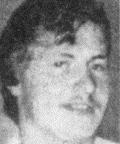
More than half a century has passed since the life of William Henry, Jr. was cut short on a fall day in Boston, yet the case remains a quiet, unresolved chapter in the city’s history. At 35 years old, William was in the prime of his life when he was killed, leaving behind a name on a list of unsolved homicides and the lingering question of who was responsible. His case is one of many from that era that await a breakthrough, a new piece of information to illuminate the path toward justice.
The official record of what happened is sparse, assembled from the few certain facts known to law enforcement. On Saturday, October 9, 1971, officers from the Boston Police Department were dispatched to 24 Linwood Square in the city’s Roxbury neighborhood. The call was for a person shot. At the scene, first responders found William Henry, Jr.
He was pronounced deceased, and the Office of the Chief Medical Examiner later determined that his death was a homicide caused by a gunshot wound.
Beyond these stark details, very little information has ever been released to the public. There is no available record of William’s family life, his career, or his passions. It is not publicly known if he was a husband or father, what he did for a living, or how his friends and loved ones remembered him. His story, and the vibrant life he likely led, has been obscured by the passage of time and the silence surrounding his violent death. The address where he was found, 24 Linwood Square, is part of a residential area with a long history, but what brought William there on that particular day remains an unanswered question.
The investigation into William Henry, Jr.'s murder was launched immediately by the Boston Police Department. In the early 1970s, detectives relied on traditional methods of investigation: canvassing the neighborhood, interviewing potential witnesses, and chasing down leads that came by word of mouth. Without the advantages of modern forensic technology like widespread DNA analysis and digital surveillance, solving a homicide often depended entirely on the willingness of community members to come forward and share what they knew.
For decades, the case has remained open but inactive, one of dozens of cold cases from 1971 alone that are still listed by the Boston Police Department. These cases represent a quiet collection of tragedies that have deeply affected families and communities. The detectives and investigators may have changed over the years, but the file remains, waiting for a new lead or a fresh look with advanced technology that might reveal what previous inquiries could not.
As of today, the murder of William Henry, Jr. remains an unsolved homicide. There have been no publicly named suspects or persons of interest, and the specific motive behind the shooting is unknown. The Boston Police Department continues to list William Henry, Jr. among its cold cases, holding out hope that someone, somewhere, holds the key to understanding what happened at 24 Linwood Square. The department encourages anyone with information, no matter how insignificant it may seem, to come forward.