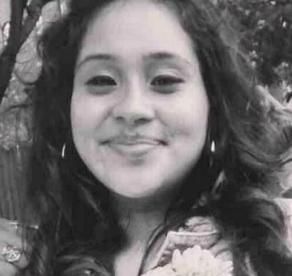
In the spring of 1991, a family argument had a devastating and final consequence for 13-year-old Beverlie Tracy. The young girl from Grain Valley, Missouri, would become the youngest known victim of a serial killer who terrorized the Kansas City area for more than a decade. Her death is one of a string of brutal slayings attributed to a phantom-like predator known as the Missouri River Killer or the Avenue Mutilator, whose crimes have left a permanent scar on the community and a legacy of
unanswered questions.
On April 3, 1991, Beverlie and her mother had a heated disagreement at a friend's house. Upset, Beverlie decided to leave and begin the long, 16-mile walk back to her home. It was the last time her family would see her alive. In the days that followed, a frantic search began, but there was no sign of the teenager. Witnesses later reported seeing a girl who looked like Beverlie talking to a bearded man in a brown 1977 Chevy Malibu on the day she vanished, a fleeting clue in a case that would soon grow cold. A composite sketch of the man was eventually released, but it led nowhere.
Eleven days later, on April 15, 1991, Beverlie’s body was recovered from the cold waters of the Missouri River near Napoleon. The discovery confirmed the worst fears and immediately linked her murder to a disturbing series of killings. An autopsy revealed that Beverlie had been shot in the chest. In a gruesome signature that marked the work of the Missouri River Killer, both of her legs had been severed.
Beverlie was one of at least seven women and girls, aged 13 to 36, murdered by this unidentified killer between 1982 and 1994. The victims were often found in the Missouri River, and several, like Beverlie, suffered postmortem mutilation. The killer’s methods varied, including stabbing, strangulation, and shooting, creating a complex and terrifying pattern for law enforcement to decipher. Many of the victims had connections to Kansas City's Independence Avenue, but Beverlie did not fit this profile, deepening the mystery of how she crossed paths with her killer.
The investigation into the string of murders was extensive, involving multiple agencies, including the Kansas City Police Department and the FBI. Over the years, a man named Gregory Breeden, a local supply clerk, was identified as a primary suspect in the series of killings. He was investigated for the first murder in 1982 and later indicted for the 1994 murder of Viola McCoy, the killer's last known victim. However, the charge against Breeden was dropped in 1999 due to a lack of evidence after a key witness refused to testify. Breeden always maintained his innocence, and he was never charged in connection with Beverlie Tracy's death. He died of natural causes in 2014, taking any potential secrets to his grave.
Decades have passed since Beverlie Tracy was stolen from her family, but her case remains officially unsolved, as do the other murders attributed to the Missouri River Killer. The identity of the person responsible for this reign of terror is still unknown. For the families of the victims and the investigators who pursued the case, the lack of justice is a wound that has never healed. Beverlie is remembered not as a statistic in a serial killer's tally, but as a young girl whose life was cut tragically short, a painful reminder of the predator who once haunted the banks of the Missouri River.