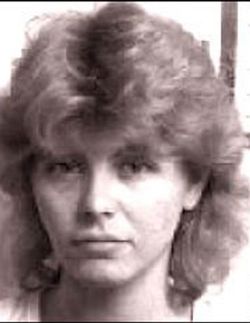
On Memorial Day, May 31, 1982, the body of a young woman was discovered floating in the Missouri River near the Chouteau Bridge in Kansas City, Missouri. Two fishermen made the grim finding that morning, pulling her from the water and alerting authorities. An autopsy would later reveal the brutality of her final moments: she had been strangled with a rope that was still tightly wound around her neck and stabbed 13 times in the chest. The woman was identified as 27-year-old Annette K.
Parker, a resident of Omaha, Nebraska. She had been reported missing more than a week before her body was found, leaving a painful void of unanswered questions for those who knew her.
Annette’s case was the first in a string of horrific discoveries that would terrorize the Kansas City area for over a decade. Investigators would eventually link her death to a serial predator who came to be known as the Missouri River Killer, or the Avenue Mutilator. Between 1982 and 1994, at least seven women and girls became victims of this killer, their bodies all disposed of in the river. The killer’s methods varied, including stabbing, shooting, and strangulation, and in several cases, the victims were dismembered. Though Annette's body was found intact, the circumstances of her death led police to retroactively identify her as the first known victim in this disturbing pattern of violence.
The investigation into the series of murders spanned multiple jurisdictions and years. As more victims were recovered from the river, a chilling pattern emerged. Many of the women were known to frequent Independence Avenue in Kansas City, but Annette’s connection to the city and the killer remained a mystery. Unlike the subsequent victims who were mostly local to the Kansas City area, Annette was from Omaha, and what brought her to Missouri and into the path of a murderer is still unknown. Her case added a perplexing geographical outlier to the string of homicides.
Over the years, a primary suspect emerged in the investigation. Gregory Breeden, a supply clerk and U.S. Navy veteran living in Kansas City, was questioned early on in connection with Annette's murder. At the time, he claimed that he and Annette had been engaged, and he was released without being charged. Breeden remained on law enforcement's radar, and in 1994, he was arrested on unrelated charges. A search of his home uncovered knives and clothing that seemed to match items belonging to another victim. In 1996, he was indicted for the murder of Viola McCoy, another woman believed to be a victim of the Missouri River Killer, but the charges were ultimately dropped due to a lack of evidence.
Despite the strong suspicion surrounding Breeden, he was never brought to trial for any of the murders connected to the Missouri River Killer. He maintained his innocence until his death from natural causes in 2014. With his death, the hope of a confession or a definitive answer in Annette’s case faded, leaving her murder officially unsolved. The identity of the person or persons responsible for her death, and the deaths of the other six victims, remains one of Kansas City's most haunting cold cases.
More than four decades have passed since Annette K. Parker was taken from her life and family. The story of her death is tragically intertwined with the larger, unresolved narrative of a serial killer who used the murky waters of the Missouri River to conceal his crimes. While the investigation has long gone cold, the memory of Annette and the other victims endures. Her case is a somber reminder of the lasting pain of unsolved violence and the many questions that may forever lie buried with the past.