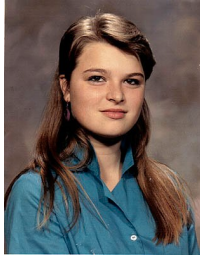
In the spring of 1988, a series of grim discoveries along the banks of the Missouri River terrorized the Kansas City area, revealing the work of a vicious serial killer. Among the victims was Rhonda Dennis, a 16-year-old girl whose life was violently cut short. Her case remains a haunting chapter in the unsolved saga of the predator known as the Missouri River Killer.
On May 10, 1988, Rhonda’s body was found floating in the river.
The discovery came just three days after another victim, 17-year-old Linda Dennis (no relation), was found deceased on the river's north side. The same day Rhonda was recovered, a fisherman also found the body of 19-year-old Kimberly Rash. The cluster of victims pointed to an active and brutal killer in the community’s midst. An autopsy revealed that Rhonda had been stabbed 31 times, and her clothes had been removed.
Investigators quickly sought to connect the victims. Unlike some of the other women, Rhonda had no known history of involvement in prostitution. The one significant link that placed her in the killer's presumed hunting ground was her address: she lived on Independence Avenue. This street was known as an area where other victims had been seen or were known to work, creating a geographical tie in the expanding investigation.
The murders were attributed to a serial killer dubbed the "Missouri River Killer" and sometimes the "Avenue Mutilator," who is believed to be responsible for the deaths of at least seven women and girls between 1982 and 1994. The killer’s methods were varied and savage, including stabbing, shooting, and strangulation. A particularly gruesome signature in several of the murders was the dismemberment of the victims' legs, though this was not the case with Rhonda.
In the wake of the discoveries of Rhonda, Linda, and Kimberly, a special task force was formed, bringing together the Kansas City Police Department, the Ray County Sheriff's Office, and the FBI. However, the collaboration was short-lived. Within a month, the task force was disbanded, with law enforcement admitting they "just couldn't put anything together." The investigation stalled for years, leaving a trail of cold cases and grieving families.
Over time, police focused on a primary suspect, a Kansas City supply clerk named Gregory Breeden. He was investigated in connection with several of the murders, and a search of his home in 1994 uncovered knives and clothing similar to that worn by one of the victims when she disappeared. Despite being indicted for one of the murders in 1996, the charge was later dropped due to a lack of evidence after a key witness refused to cooperate. Breeden, who maintained his innocence, was never brought to trial for the killings. He died of natural causes in 2014, taking any potential secrets to his grave.
Decades have passed since Rhonda Dennis was stolen from the world. Her murder, and the murders of the other young women found in the Missouri River, remain officially unsolved. The case of the Missouri River Killer is a dark stain on Kansas City's history, a chilling reminder of a predator who was never caught and the young lives, including that of a 16-year-old girl from Independence Avenue, that were lost. The families of the victims continue to wait for answers and the justice that has long been denied.