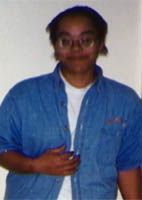
In the summer of 1986, Melody Jo Milliner, a 24-year-old mother, was navigating a difficult path in Kansas City, Missouri. Known to those who loved her as a kind woman who regularly helped her father on his farm in Kansas, she was also a mother to a two-year-old daughter. To support her child, Melody worked as a prostitute, often frequenting the area around Independence Avenue, a stretch of road known for its dangers.
In the days before her death, she had told her father she was providing information to the police for an unknown investigation, a decision that may have placed her in even greater peril.
On August 6, 1986, her life was brutally cut short. Melody’s body was discovered floating in the Missouri River in Lafayette County. The state of her remains told a horrific story; she had been stabbed to death, and her legs had been amputated at the hips. Her death was not an isolated incident but part of a terrifying pattern that was beginning to emerge in the Kansas City area. Law enforcement would soon realize they were hunting for a serial killer.
Investigators linked Melody’s murder to a string of at least seven killings of women and girls that occurred between 1982 and 1994. The unknown assailant was dubbed the "Missouri River Killer" or the "Avenue Mutilator." The victims, ranging in age from 13 to 36, were often connected to sex work and the Independence Avenue area. The killer’s methods were vicious and varied, including stabbing, strangulation, and shooting. A particularly gruesome signature was the dismemberment of four of the victims, including Melody. The river, it seemed, was the killer’s dumping ground, a place to wash away evidence and terrorize a community.
The investigation into the series of murders spanned more than a decade, involving multiple law enforcement agencies. As more victims were recovered from the river, a profile of the killer began to form, but a solid suspect remained elusive for years. The cases grew cold, leaving a trail of grieving families and unanswered questions.
Years later, in 1994, a breakthrough seemed to come with a man named Gregory Breeden. When police arrested the supply clerk on unrelated check forgery charges, a search of his home uncovered a disturbing collection of 19 knives and clothing that resembled what Melody Milliner was wearing when she disappeared. Breeden was eventually indicted in 1996 for the murder of another victim, Viola McCoy, but was never charged in Melody's case.
The case against Breeden, however, fell apart. The murder charge for Viola McCoy was dropped in 1999 due to a lack of evidence after a key witness refused to cooperate. Breeden, who had known some of the victims from the Independence Avenue area, always maintained his innocence in connection to the slayings. He died of natural causes in May 2014, taking any potential secrets to his grave.
Today, the murder of Melody Jo Milliner remains unsolved, as do the other cases attributed to the Missouri River Killer. Her daughter grew up without her mother, and her family was left without justice. The case is a cold but open wound for a community that once lived in fear of a predator who used the city's streets as his hunting ground and its powerful river as a tomb. The search for answers continues, resting on the hope that a new tip or a technological advance might one day identify the man who silenced Melody’s song.