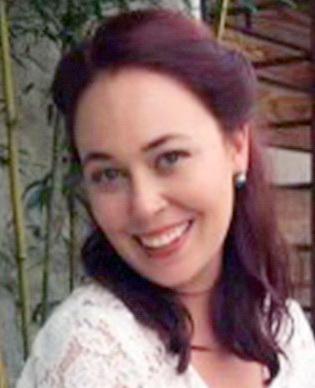
Reo Renee Holyfield, a 34-year-old Black woman known to her loved ones as “Chocolate,” was a fighter, a protector, and the first girl born into her family, which showered her with affection. Growing up on the South Side of Chicago, she had an effervescent soul and a talent for singing that drew comparisons to Lauryn Hill. Her cousin, Riccardo Holyfield, fondly recalled how she could hit all the high notes and how her birthday in July was always a cause for a major family celebration.
Reo was loved for her vibrant personality and for the simple things, like the spaghetti and peanut butter and jelly sandwiches she made. She enjoyed exploring the city and her life was a source of joy to those who knew her.
That life was tragically cut short in 2018. On September 10, a city sanitation worker in the 500 block of West 95th Street made a horrifying discovery. While emptying a garbage can into a truck, the worker saw Reo’s body among the refuse. Authorities believed her remains had been in the dumpster for about two weeks. The advanced state of decomposition made it impossible for the medical examiner to determine an official cause of death, leaving her case classified as "undetermined." However, investigators believe she was a victim of homicide by asphyxiation. The condition of her body was so poor that her family was denied a proper farewell; they could not have a funeral or touch a casket, and she had to be cremated.
Reo’s death is not seen as an isolated crime but as part of a deeply disturbing pattern of violence that has haunted Chicago for years. Her case is one of at least 51 unsolved murders of women, predominantly Black, that occurred between 2001 and 2018. The nonprofit Murder Accountability Project (MAP), using a computer algorithm to detect patterns in homicides, identified this cluster of killings, suggesting the work of one or more serial killers dubbed the "Chicago Strangler." The victims were often strangled or asphyxiated and left in desolate locations like alleys, abandoned buildings, and garbage containers, primarily on the city's South and West Sides.
The Chicago Police Department has historically stated there is no definitive evidence linking all the cases to a single killer, but they have agreed to review the 51 cases identified by MAP. For the families of the victims, the lack of answers is a source of profound and ongoing pain. Riccardo Holyfield has become a vocal advocate, not just for his cousin, but for all the women whose cases remain unsolved. He has canvassed neighborhoods, put up flyers, and spoken out to bring attention to the string of tragedies, frustrated by what he feels is a dismissal of the cases because of the victims' backgrounds. "I think about how my cousin was in a dumpster, and nobody found her for two weeks," he said, questioning how that could happen in a well-traveled alley.
The investigation into Reo Holyfield's murder remains open and unsolved, as do the vast majority of the 51 cases. The similarities in the method of killing and the profile of the victims have led community activists and families to demand more action and answers from law enforcement. They fear that unless the perpetrator or perpetrators are caught, more lives will be lost. The term "Unforgotten 51" was coined to humanize the women and ensure their names and stories are not lost in the statistics of a city's violent crime.
For Reo’s family, the fight for justice is deeply personal. Her cousin Riccardo speaks of an inner fire that fuels his quest for answers, a pain that feels as fresh as the day he received the news. He continues to speak to his cousin as if she were still there, a testament to the bond they shared. The family misses her every day, through every holiday and birthday that passes without her. Her case remains a stark reminder of the many women lost in Chicago, whose families are still waiting for justice and closure that may never come.