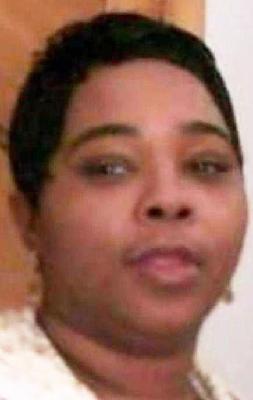
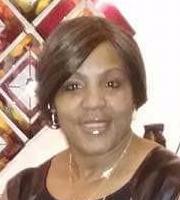
On a summer day in Chicago, a man named Breon Smith made a devastating discovery that added another name to one of the city’s most disturbing and unresolved collection of crimes. On August 9, 2012, in a vacant lot in the 7800 block of South Lowe Avenue, he found the body of Pamela Wilson. Pamela, a 46-year-old Black woman, had been killed by strangulation.
Her life was taken from her, and her case would become a chilling statistic in a series of homicides that has haunted the city for years.
The investigation into Pamela’s death did not exist in a vacuum. Her murder was quickly recognized as part of a deeply troubling pattern. Between 2001 and 2018, dozens of women, the majority of them Black, were killed in a terrifyingly similar manner across the South and West Sides of Chicago. The method was consistently strangulation or asphyxiation, and the victims were often left in desolate, out-of-the-way places: alleys, abandoned buildings, garbage cans, and vacant lots like the one where Pamela was found.
This cluster of unsolved murders captured the attention of the Murder Accountability Project, a nonprofit organization that analyzes homicide data to identify potential serial-killer activity. Their algorithm flagged a series of at least 51 unsolved strangulations in Chicago as a significant cluster, suggesting one or more serial predators, dubbed the "Chicago Strangler," may have been responsible. Some analyses have suggested the total number of similar murders could be as high as 75. The victims were daughters, sisters, and mothers, whose lives were cut short by brutal violence.
Despite the striking similarities in victimology, geography, and method of killing, the Chicago Police Department has remained hesitant to officially link the 51 cases or attribute them to a single serial killer. While they have acknowledged the pattern and agreed to review the cases under pressure from activists and community leaders, officials have stated that they have not found definitive evidence, such as DNA, connecting the murders to one individual. For the families of the victims and concerned citizens, this response has often felt inadequate, leaving a cloud of fear and unanswered questions over the city.
The lack of resolution in these cases means that for many of the women, including Pamela Wilson, their stories have been tragically reduced to a name on a list. Little has been shared publicly about who Pamela was as a person—her passions, her family, her journey through life. Her death, and the deaths of the many other women, highlight a crisis of violence that has left a trail of grief and a community demanding justice. Community activists have worked to ensure these women are not forgotten, holding vigils and reading their names aloud, fighting against the silence that too often surrounds the deaths of marginalized women.
Today, Pamela Wilson’s murder remains unsolved, with no arrests made and no justice for the life that was taken. Her case, like the 50 others in the potential cluster, is a cold case, a painful reminder of a predator or predators who operated with impunity for nearly two decades. The investigation is officially still open, but without new leads or a significant breakthrough, the truth of what happened to Pamela on that August day in 2012 remains buried, and her loved ones are left without answers.