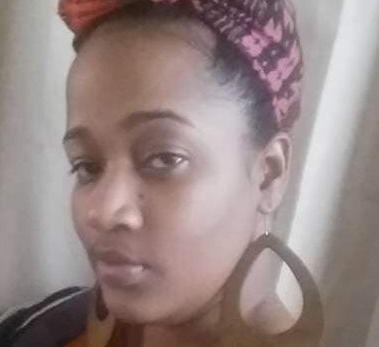
On a bleak autumn day in Chicago, the life of Tamala Edwards, a 37-year-old Black woman, ended in a manner that was both brutal and terrifyingly familiar to law enforcement. On Saturday, October 16, 2004, her body was discovered discarded in an alley, a location that offered no dignity and few clues. The grim discovery marked the end of her story and her entry into a tragic catalog of violence that has haunted the city for years.
The details of how Ms.
Edwards was found spoke to the cold and methodical nature of her killer. Her body had been bound, wrapped inside a comforter, and secured with duct tape. This careful and dehumanizing packaging was not random; it was a signature. The cause of her death was determined to be strangulation or asphyxiation, a method that is both intimate and brutal. Her murder was not an isolated incident but one of a horrifyingly long series of similar killings.
Investigators quickly recognized that Tamala Edwards was a potential victim of a serial predator, or possibly multiple predators, often referred to as the "Chicago Strangler." Her death fit a disturbing pattern that had been emerging in the city since 2001. Over nearly two decades, between 2001 and 2018, at least 51 women were killed in strikingly similar ways, with some estimates placing the total number of connected cases as high as 75. The victims were predominantly African-American women, and their bodies were frequently left in abandoned buildings, vacant lots, garbage cans, and alleys on the city's South and West Sides.
The methods were consistent: strangulation or asphyxiation. The disposal of the bodies suggested a killer who moved through the city's forgotten spaces with confidence, using the urban landscape to conceal his crimes. For years, activists and researchers, most notably the Murder Accountability Project, worked to connect the dots, using algorithms to identify the cluster of unsolved homicides that pointed toward one or more serial offenders. They argued that the sheer number of women killed in the same manner, in the same general areas, could not be a coincidence.
Despite these patterns, the investigation into the string of murders has been fraught with challenges, and for years, official acknowledgment of a serial killer was slow to come. Many of the victims lived on the margins of society, a factor that advocates believe resulted in less public outcry and media attention, making it easier for their cases to grow cold. The lack of witnesses and the forensic complexities of crime scenes exposed to the elements made gathering evidence incredibly difficult.
To this day, the murder of Tamala Edwards remains unsolved, and her killer has never been brought to justice. Her case is one of dozens of files that remain open, a collection of unanswered questions and enduring pain for the families left behind. While a few individual cases within the larger cluster have been solved, leading to arrests and convictions, those resolutions have not been definitively linked to the majority of the other killings. The identity of the person or persons responsible for this long reign of terror remains one of Chicago's most troubling and persistent mysteries.
Tamala Edwards is more than a statistic in a grim series of crimes. She was a woman in the prime of her life whose future was stolen from her. Her unsolved murder underscores a devastating reality for dozens of families in Chicago who continue to wait for answers and for justice that has been denied for far too long.