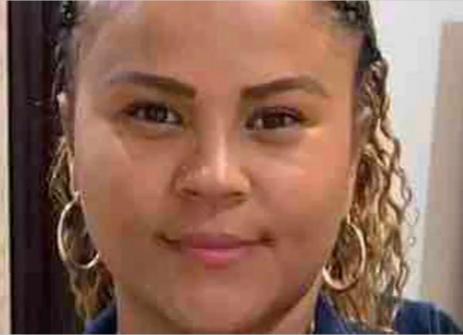
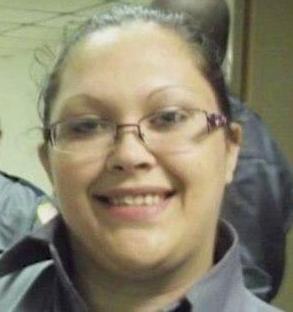
In the early hours of Sunday, February 15, 1998, a passerby made a devastating discovery in Old East Dallas, Texas. On the cold ground in the 6100 block of Santa Fe Avenue lay the body of Maria de Lourdes Perales, a vibrant young woman whose life had been brutally extinguished at the age of 20. The scene was one of horrific violence; Maria had been sexually assaulted, strangled, and then run over by a car.
Her death marked the beginning of a years-long mystery that would leave a community in fear and a family without answers.
For five years, Maria’s case grew cold. There were no suspects and no leads, just the lingering pain of a life taken too soon. Investigators had little to go on, and the trail of her killer seemed to have vanished. It was a period of agonizing uncertainty for those who knew and loved her. The initial investigation documented the terrible facts of her death, but the identity of the person responsible remained unknown, a shadow in the Dallas community.
The first break in the case came not from Maria's investigation, but from another murder five years later. In May 2003, the body of 27-year-old Veronica Hernandez was found at a mechanic shop in Dallas. An anonymous tip led police to an employee named Jose Sifuentes, who was arrested after confessing to her murder. As part of that investigation, a DNA sample was collected from Sifuentes. In a shocking turn of events, Sifuentes was released on bond, and he immediately fled to Mexico, becoming a fugitive from justice.
After he vanished, the DNA sample taken from Sifuentes was analyzed further. The results provided the crucial link that detectives had been missing for years. His genetic profile matched DNA evidence recovered from the 1998 murder of Maria de Lourdes Perales. It also connected him to another unsolved murder from that same year: the killing of 23-year-old Erica Olivia Hernandez in June 1998. Police now knew they were dealing with a serial killer who preyed on young women he met at local bars and clubs.
For nearly 17 years, Jose Sifuentes lived as a free man in Mexico, hiding in the small town of San Vicente de Gonzalez in Nuevo Leon. But the Dallas Police Department’s cold case unit and the Dallas County District Attorney’s Office never gave up. In 2017, armed with the DNA evidence, they secured capital murder indictments against Sifuentes for the deaths of Maria and Erica. A collaborative international effort involving the FBI, the U.S. Department of Justice, and Mexican authorities led to his capture in April 2019. In January 2020, Sifuentes was extradited back to Dallas to finally face justice.
Upon his return, Sifuentes confessed to all three sexually motivated murders. In May 2021, to avoid a trial, Jose Sifuentes, then 43, pleaded guilty to three counts of murder. He was given three concurrent life sentences. The plea brought a legal conclusion to a tragedy that spanned more than two decades. "This guy was born to kill. He treated women as soulless objects," said prosecutor Leighton D'Antoni, reflecting on the cold brutality of the crimes.
The resolution of the case was a testament to the persistence of law enforcement and the power of forensic science. Dallas County District Attorney John Creuzot praised the "diligence and persistence to bring a violent criminal to justice," adding, "We continue to pray for the healing of the families of the victims." While justice was finally served, it could never replace the vibrant life of Maria de Lourdes Perales, a young woman whose future was stolen on a cold February morning.