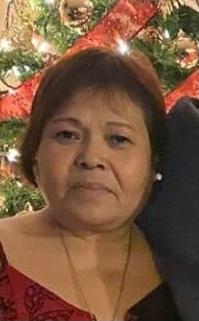
In the spring of 1976, Joyce Catlin, a female resident of Bakersfield, California, fell ill with what seemed to be a severe case of the flu. In April, she was admitted to Mercy Hospital with complaints of back pain, vomiting, and a sore throat. Her condition worsened, and she was soon transferred to the intensive care unit as her lungs began to fail. Doctors, including a lung specialist, were baffled. They treated her for possible viral or bacterial infections, but nothing worked.
Nineteen days after she was first hospitalized, on May 6, 1976, Joyce’s lungs gave out completely, and she died.
An autopsy revealed that Joyce's lungs were unusually heavy and scarred with fibrous tissue, a condition known as pulmonary fibrosis. The pathologist found no evidence of any infection that could explain her death. Though her official cause of death was listed as acute respiratory failure due to unknown microorganisms, some of her physicians suspected she had been poisoned with paraquat, a highly toxic herbicide used for weed control. However, the limitations of toxicological testing in 1976 made it impossible to confirm their suspicions more than 72 hours after ingestion. Joyce's husband, Steven David Catlin, ordered her body to be cremated immediately, seemingly closing the book on her sudden and mysterious death.
For eight years, Joyce's death remained an unsolved medical mystery. The truth only began to surface in 1984 with the deaths of two more women connected to Steven Catlin. In March 1984, his fifth wife, Glenna Kaye Catlin, died in Fresno from a similar, rapidly progressing respiratory illness. Her death, and the fact that Steven collected on a $57,000 life insurance policy, raised red flags. Suspicions mounted when Steven's third ex-wife contacted the sheriff's office in Bakersfield, voicing her fears about the strange pattern of deaths around her former husband. The investigation into Glenna's death soon confirmed she had been poisoned with paraquat.
This breakthrough prompted investigators to revisit Joyce Catlin's case. Fortunately, Mercy Hospital had preserved tissue samples from her 1976 autopsy. As these samples were being analyzed, tragedy struck again. On December 8, 1984, Steven's 79-year-old adoptive mother, Martha Catlin, collapsed and died shortly after a visit from her son. Steven again pushed for a quick cremation, but authorities intervened and performed an autopsy. The results were damning: Martha, like Glenna, had been killed with paraquat. Soon after, analysis of Joyce's preserved lung tissue confirmed what doctors had suspected years earlier; she too was a victim of paraquat poisoning.
Steven David Catlin, a serial killer who used poison for financial gain, was finally unmasked. Investigators found a bottle of paraquat with his fingerprints in his garage. He had murdered the women in his life to collect on insurance policies and inheritances. After Joyce's death, he had received payments from two insurance policies, and a credit union policy had paid off a vehicle loan. He had previously told a witness that paraquat was the perfect tool for murder because it was undetectable.
On December 23, 1985, Steven Catlin was charged with the murders of Joyce Catlin and Martha Catlin. He had already been tried and convicted in April 1986 for the murder of Glenna Kaye Catlin, for which he received a sentence of life in prison without the possibility of parole. In a separate trial in Kern County, a jury found him guilty of the first-degree murders of both Joyce and his mother on June 1, 1990.
The jury found true the special circumstances of murder for financial gain, murder by poison, and multiple murders in the case of his mother. For the murder of Joyce Catlin, which occurred before California reinstated the death penalty, he was sentenced to life in prison. For the murder of Martha Catlin, the jury recommended death. Steven David Catlin was sentenced to death and remains in prison. The case of Joyce Catlin, a woman whose death was a mystery for nearly a decade, was finally closed, revealing a cold-blooded killer who had hidden in plain sight.