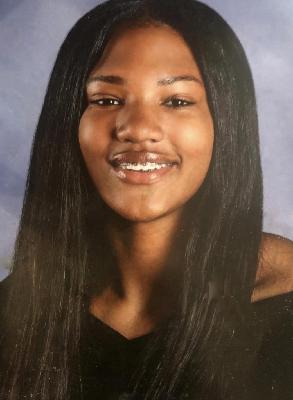
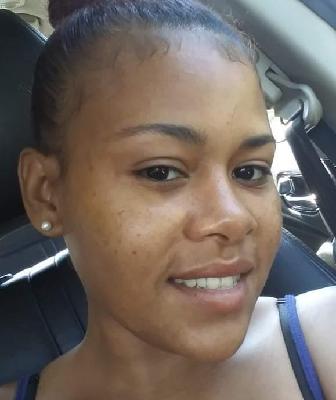
For fourteen years, the family of Gabrielle Amarando held onto a sliver of hope, a painful uncertainty about what had become of the vibrant young woman who vanished from Philadelphia in 2012. That long period of not knowing came to a devastating end in the summer of 2026, when a shocking discovery in a quiet neighborhood finally provided a grim answer. Gabrielle, a 22-year-old female, was an artistic soul who loved fashion and was known for a personality big enough to make anyone laugh.
Her friends remembered her as a wonderful person, though her life after high school was marked by a struggle with addiction that eventually led her down a different path and out of their lives.
In September 2012, all contact with Gabrielle ceased. Her family and friends were left to wonder, always assuming they would eventually hear from her again. But as years passed with no word, a dreadful silence settled in. The mystery of her disappearance was unlocked through a separate, seemingly unrelated police encounter in June 2026. The arrest of a man named Eugene Horsch on weapons and drug charges led investigators to a three-story home on West Chew Avenue in the Olney section of Philadelphia, a house he shared with his late father. This home, which neighbors would come to call a "house of horrors," held the secrets to Gabrielle's fate and that of several other missing women.
The investigation into the property uncovered a disturbing trove of evidence. Police seized 50 hard drives and other electronic devices containing more than 600,000 images and 70,000 videos. In August 2026, authorities announced a heartbreaking breakthrough. On one of the first hard drives they examined, they found digital images that appeared to show Gabrielle Amarando alive inside the house, followed by other graphic photos that depicted her deceased. The same digital media also contained similar images of another woman, 27-year-old Maribel Fresses, who had been reported missing in 2018.
The man believed to be responsible for these crimes was Eugene's father, Raymond Charles Horsch, who went by "R.C." Horsch, who died of lung disease in 2025 at the age of 82, was a pornographic filmmaker, author, and career criminal with a long and varied rap sheet that included convictions for counterfeiting, drug manufacturing, and attempting to lure a minor. Investigators now consider him a suspected serial killer, preying on vulnerable women and luring them to his home. He is suspected of killing up to five women, with two others, including his ex-wife, also missing and linked to his residence. In his own writings, Horsch chillingly described himself as an "empathetic serial killer" and detailed strangling a woman and disposing of her body through a chemical process.
Because Raymond Horsch died before the evidence came to light, he was never charged with Gabrielle's murder. The case is officially considered solved, with the primary suspect deceased. For Gabrielle's family, the confirmation of her death was a devastating blow that ended years of agonizing hope. "Her mom felt all along like she wasn't here anymore, but never got that confirmation," a childhood friend explained. "Now that she has it, it sucks. It's devastating. It's heartbreaking." Her stepmother remembered Gabrielle as a fun-loving person who was best friends with her father but had fallen in with the wrong crowd.
The extensive investigation at the West Chew Avenue home continued for weeks, with forensic teams in hazmat suits carefully searching for human remains. While chemicals, pipes, and other evidence were removed, the bodies of Gabrielle Amarando and the other victims have not been found. The Philadelphia Medical Examiner's Office could not formally determine a cause of death without a body, though strangulation was Horsch's suspected method.
Friends and family now hope that Gabrielle will be remembered for the person she was, not the horrific circumstances of her death. Her friend Ashley Levin said, "She was a person, right? First and foremost, and she was a pretty wonderful person." Another friend added, "She was a wonderful soul. She really was. Drug addiction and mental health can take people to some really terrible places, but that doesn't define that person. Gabby was just, she's so much more than that." The discovery of the images on the hard drive closed a long and painful chapter for Gabrielle's loved ones, replacing uncertainty with the harsh reality of her murder at the hands of a suspected serial killer.